
Who MenuNerds is for
- A single restaurant that wants guest ordering, table service, the kitchen and the cashier in one system.
- A restaurant chain or franchise that needs a view across its stores, while each store runs its own menu, orders and staff.
- A group with more than one brand, where the main site links to each brand and each brand lists its own stores.
- An agency whose client runs restaurants. We deploy MenuNerds together with the agency, under the agency's name, as described further down.
Where MenuNerds runs
MenuNerds is in production for a restaurant franchise in Australia, where it launched in 2026. Each store has its own subdomain, and customers order by scanning a QR code. The deployment was designed around menu performance analysis, with the aim of increasing revenue for the franchise.
For a group like this, MenuNerds separates the franchise view from the store view: a franchise admin compares branches and manages stores, promotions and staff across the group, while each store admin looks after one branch's menu, orders, inventory and delivery.
What is already in MenuNerds
For guests
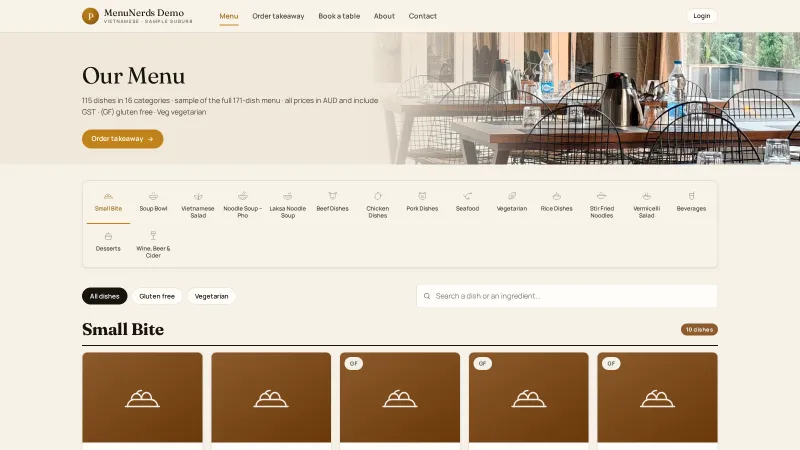
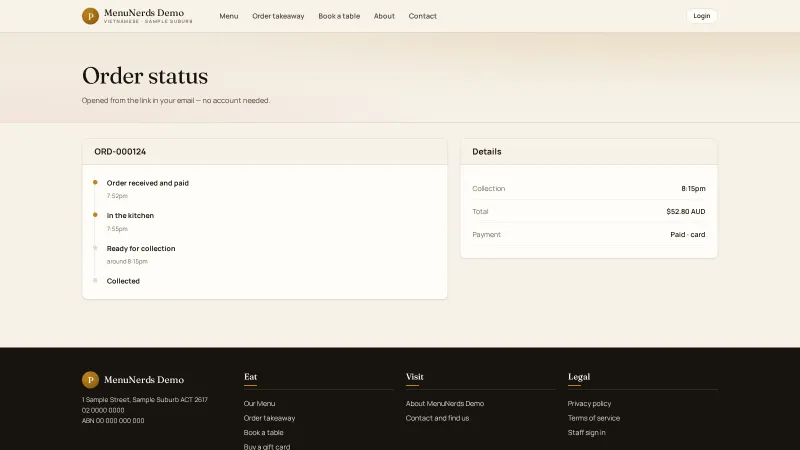
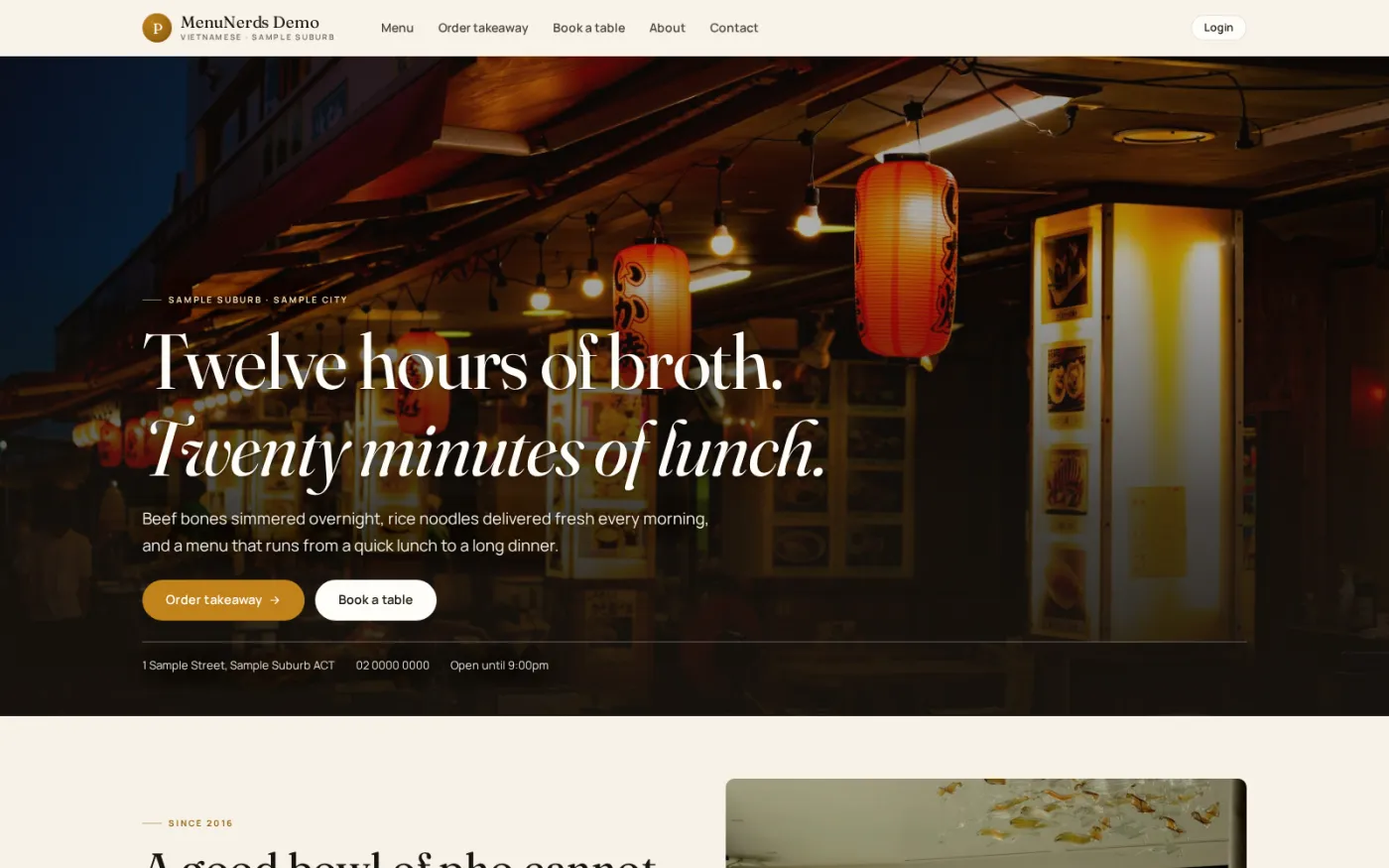
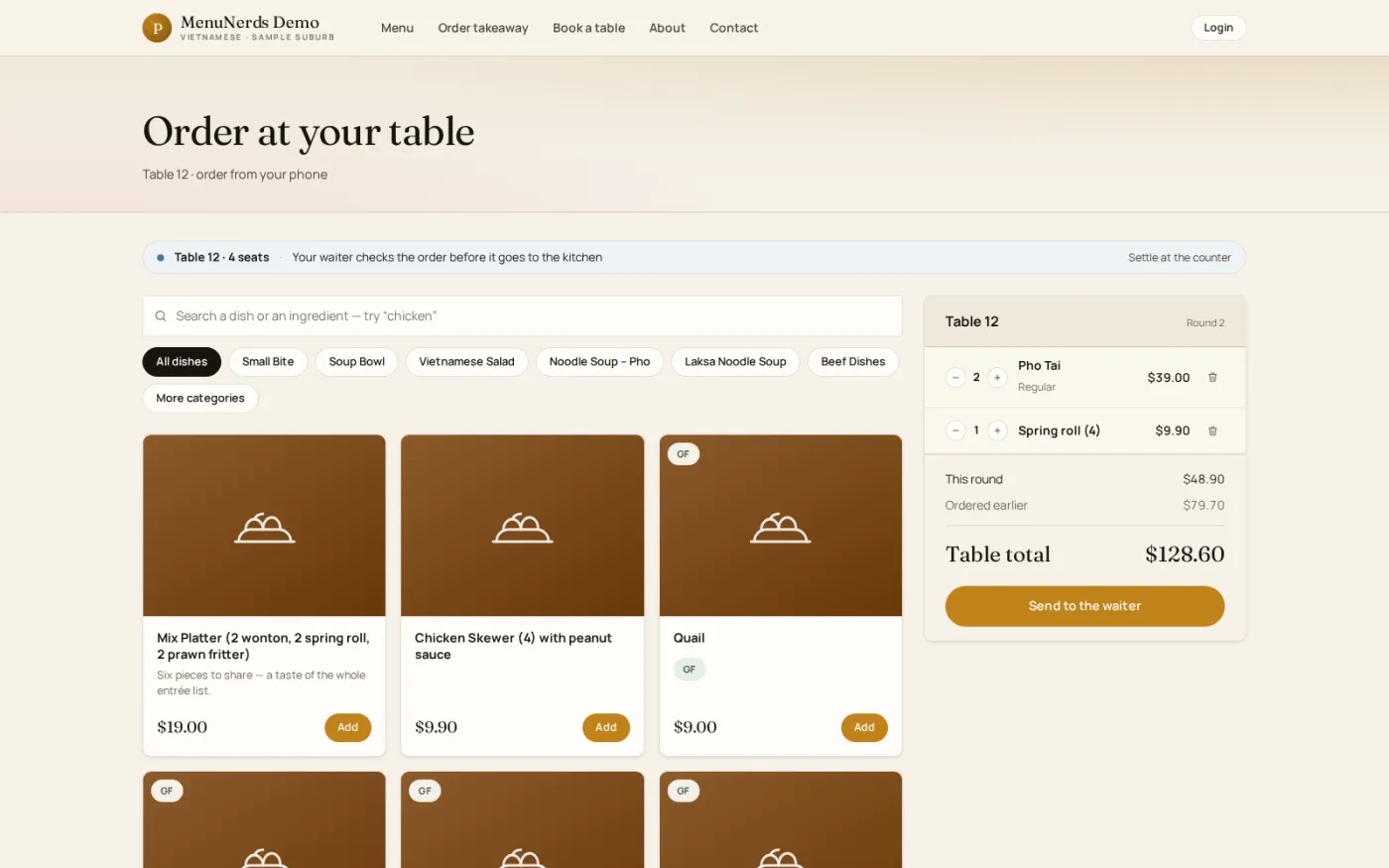
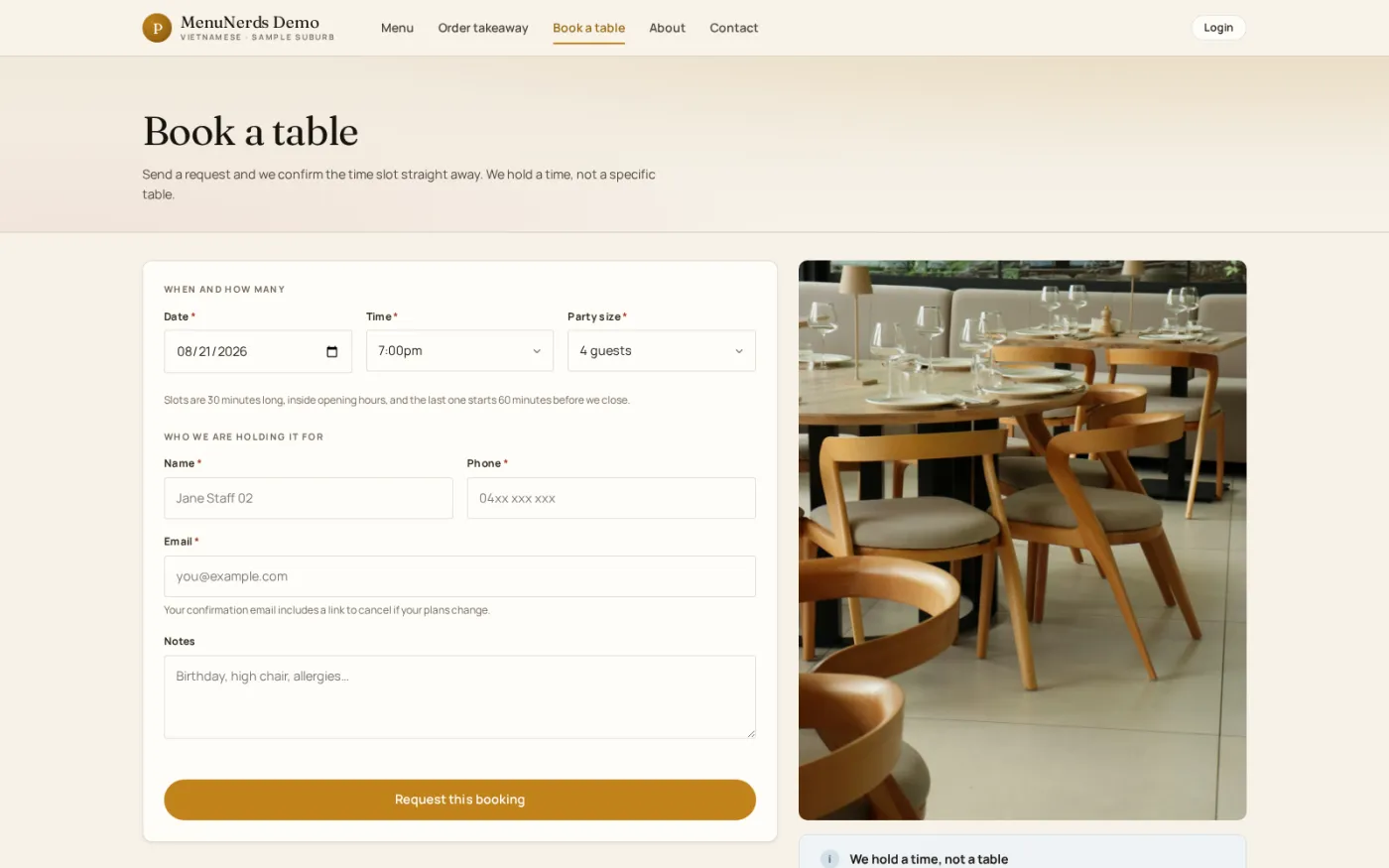
MenuNerds is built for ordering and paying at the table, and the guest side follows the shape of the business. In the running version the main site links to each brand or store, and a brand site has a store finder that lists its stores with their country and opening hours, including days split into separate service periods. Each store runs on its own subdomain with its own name, address, booking line, contact email, about page and contact form, so a guest who scans the QR code at a table lands in the right store.
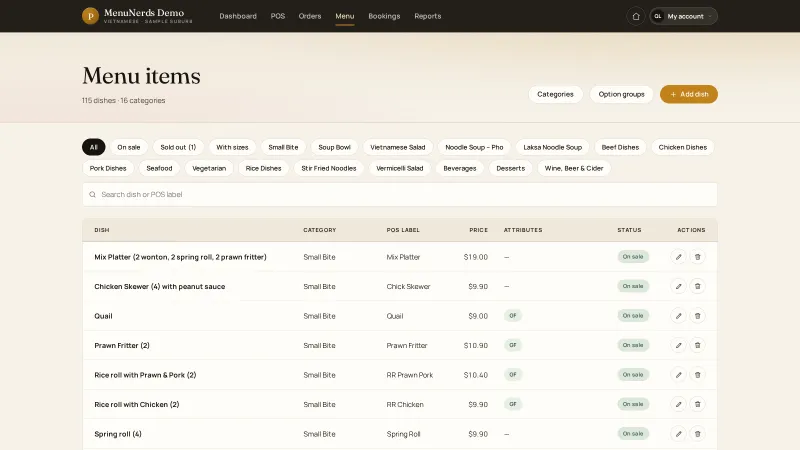
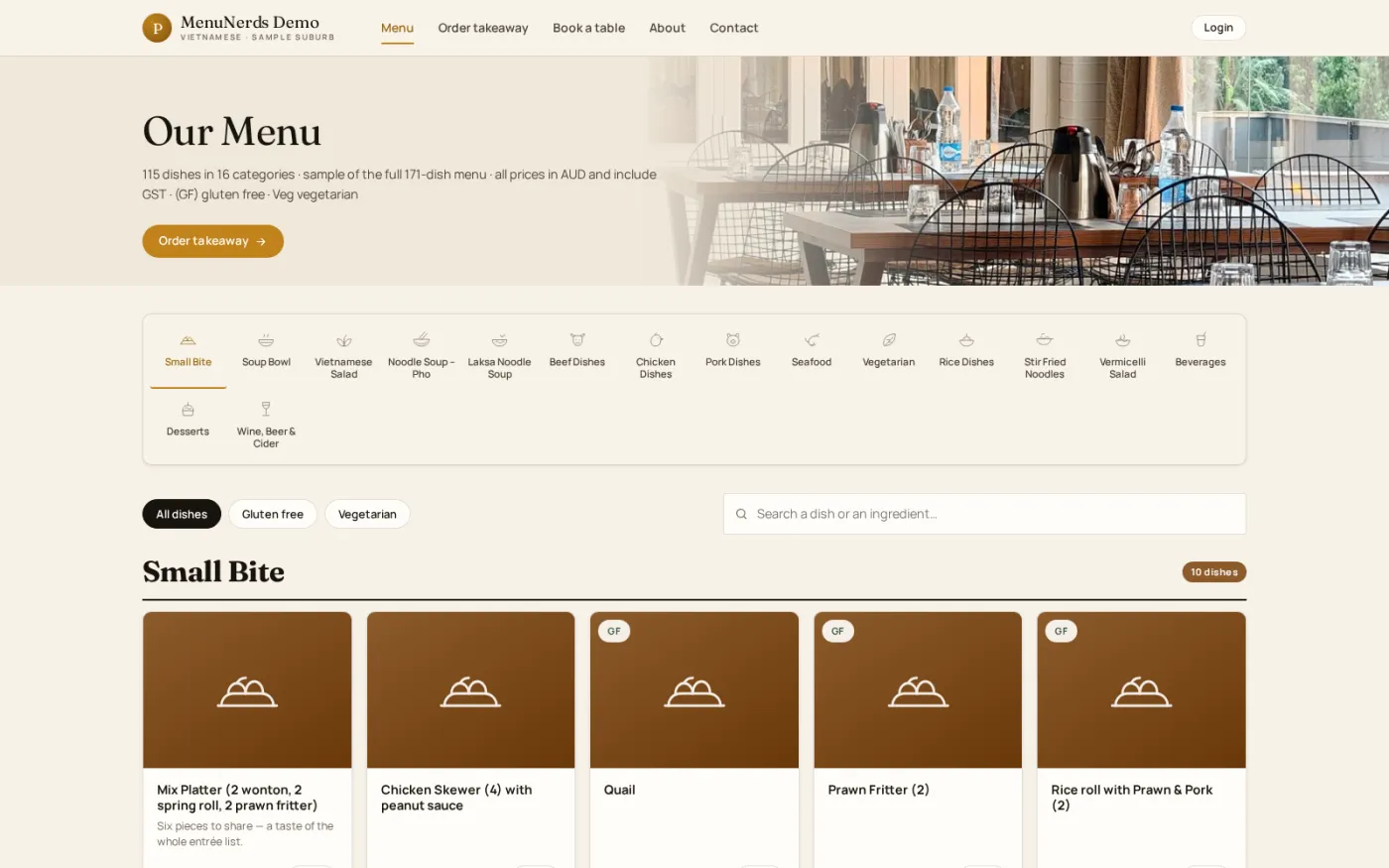
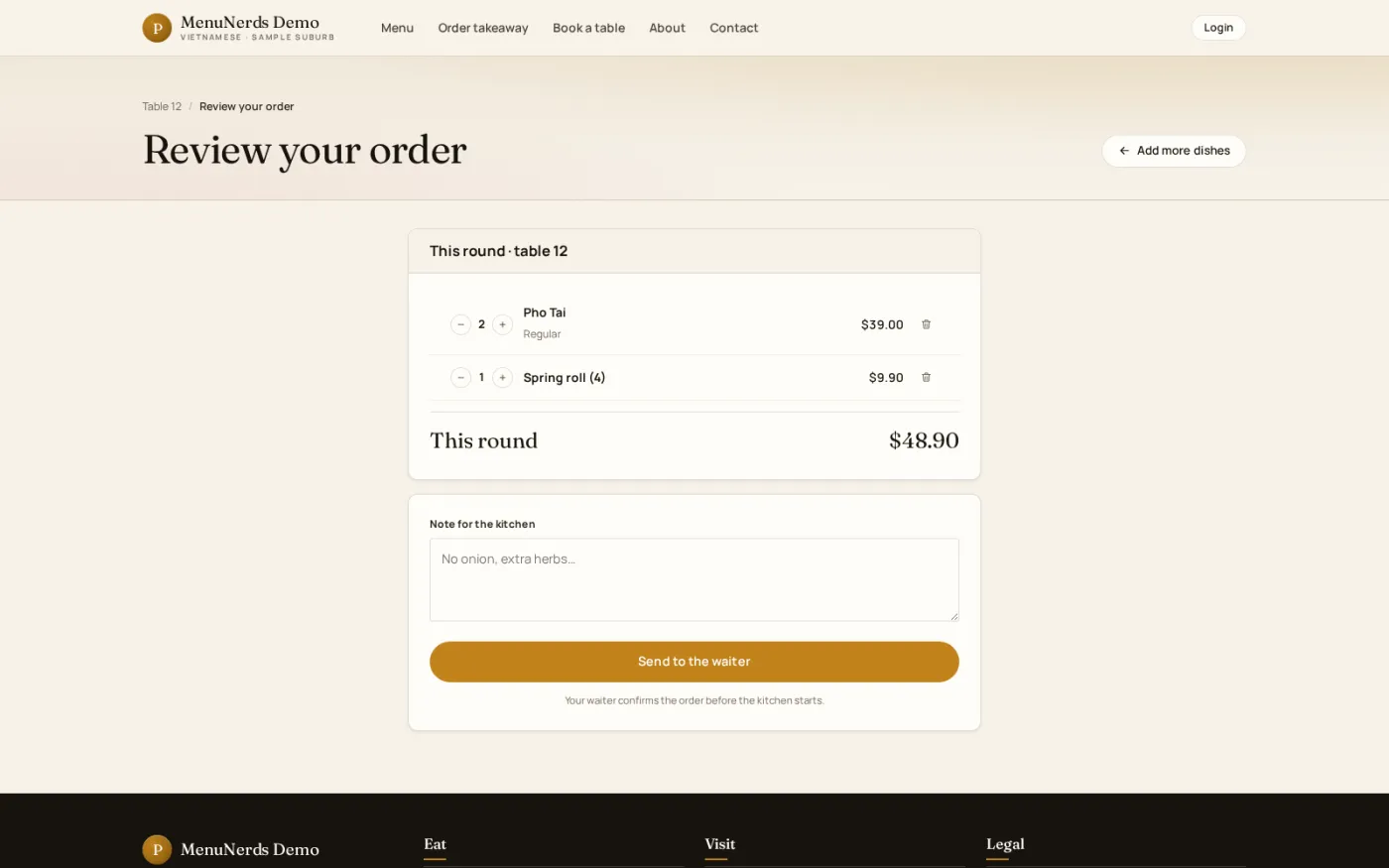
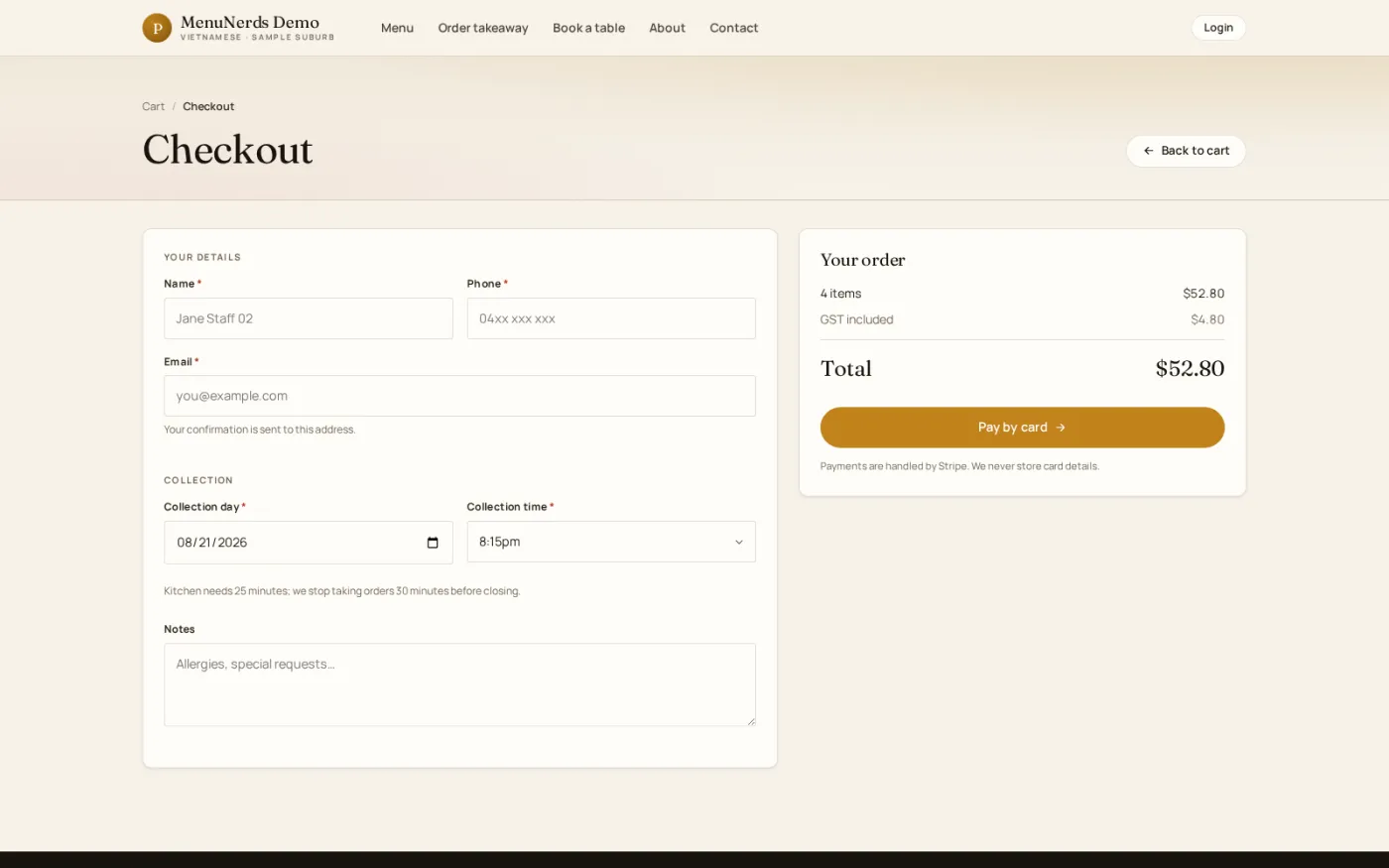
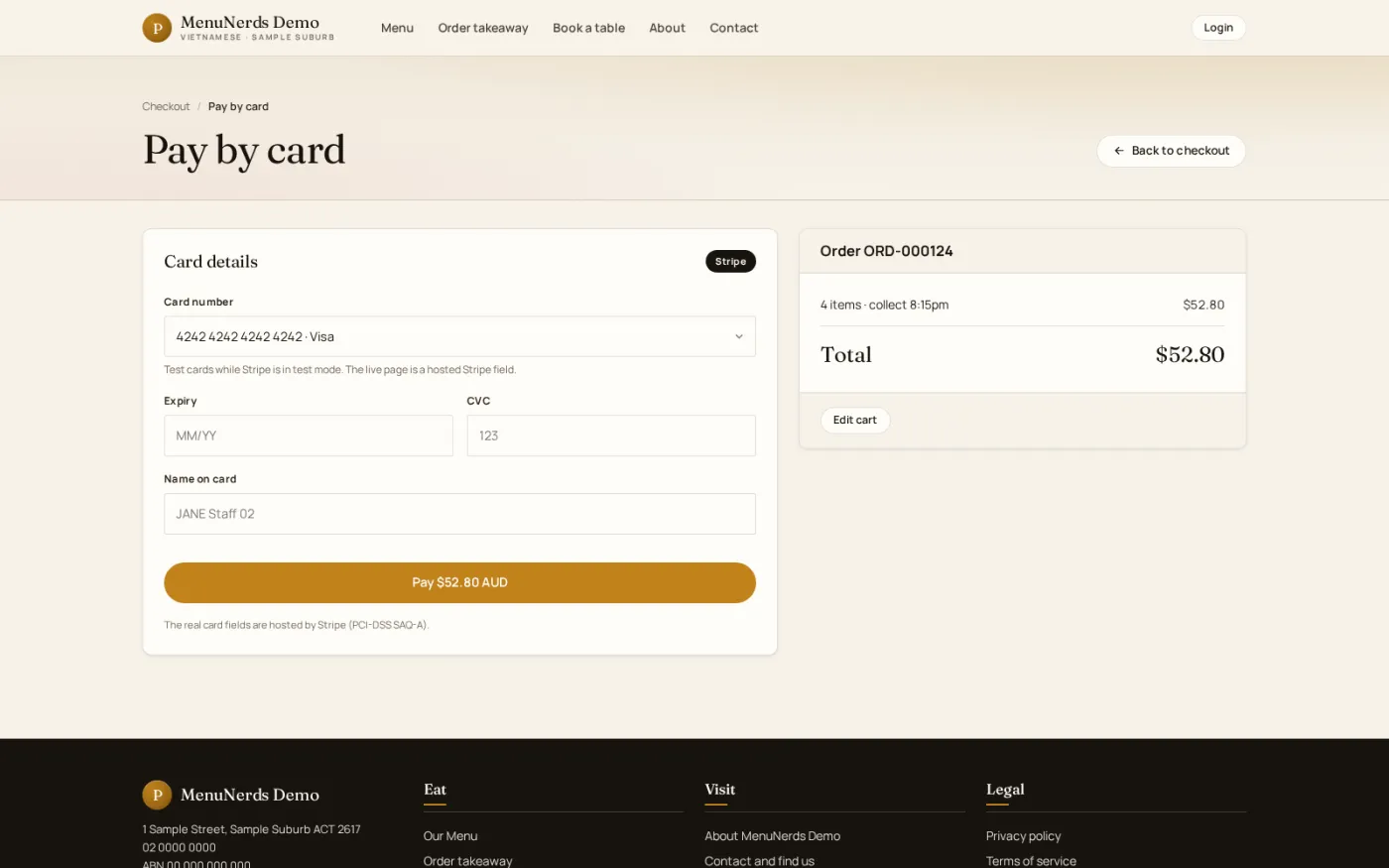
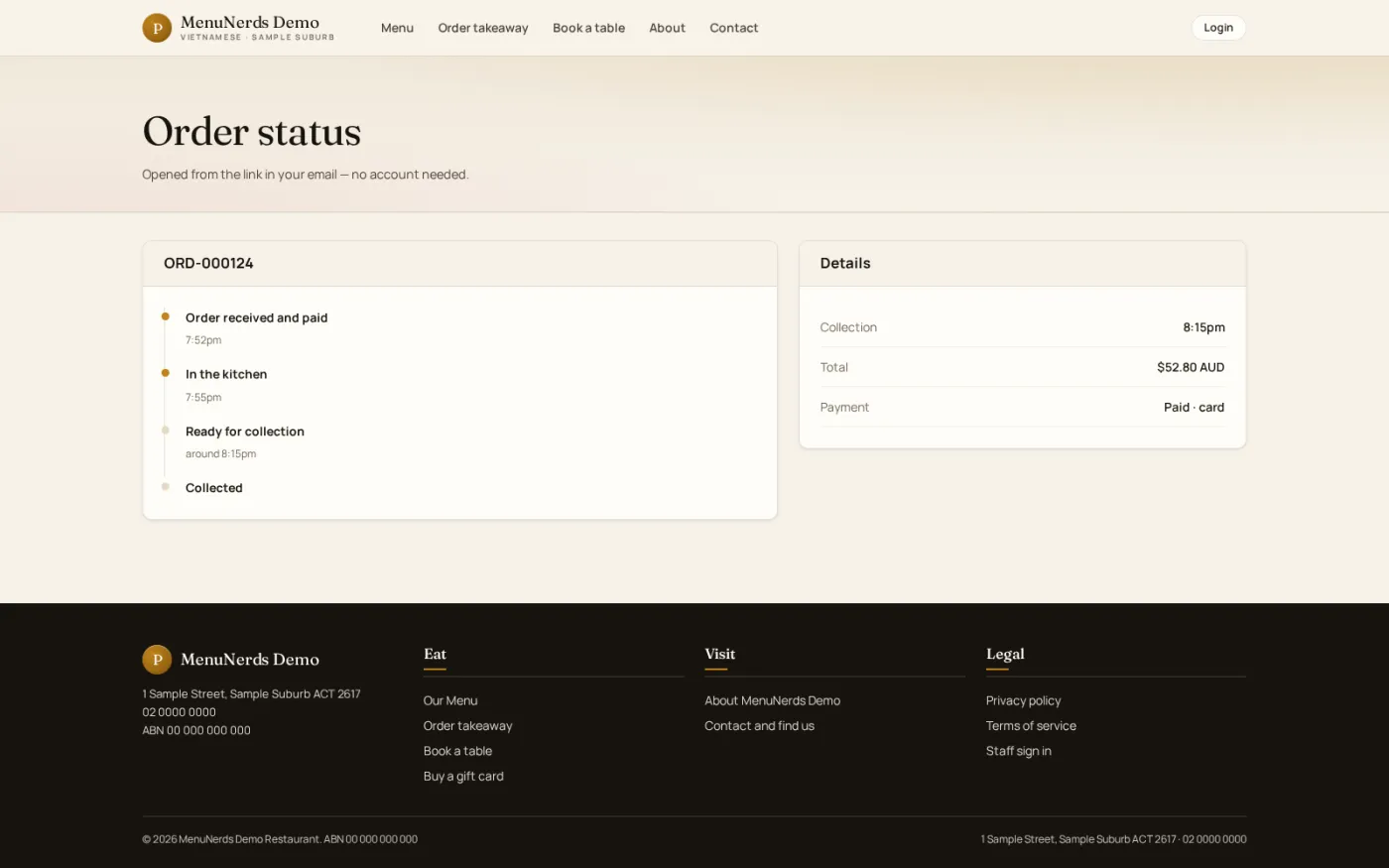
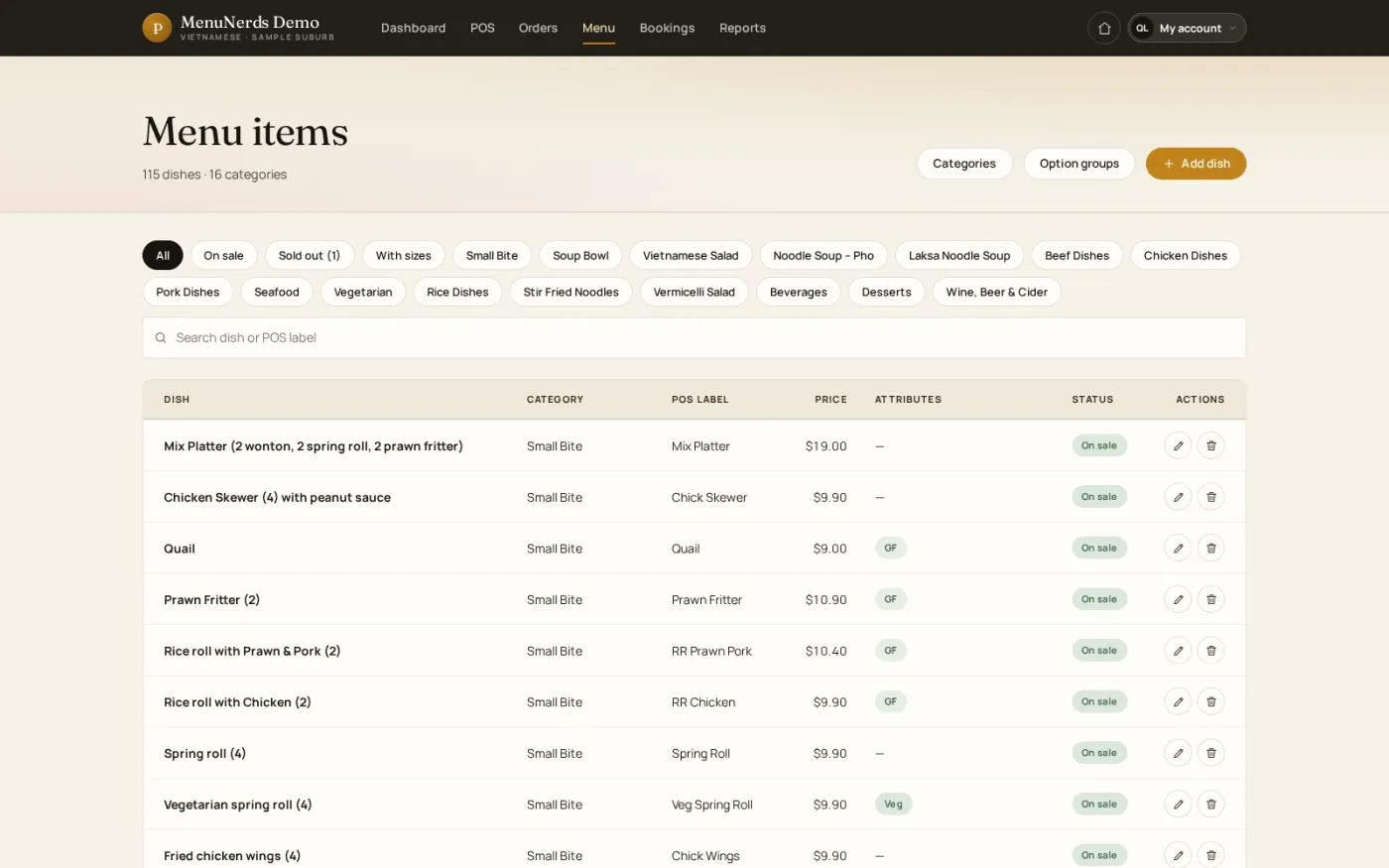
On a store site the menu is grouped into the categories that store defines, and a store can publish its own lists, such as the chef's recommendations. Orders go into a cart and through a checkout built on Drupal Commerce. A guest with an account keeps an order history, favourite dishes, a profile and notifications. The storefront switches language, English and Vietnamese in the running version, and the page addresses change with the language as well as the text.
For waiters, the kitchen and the counter
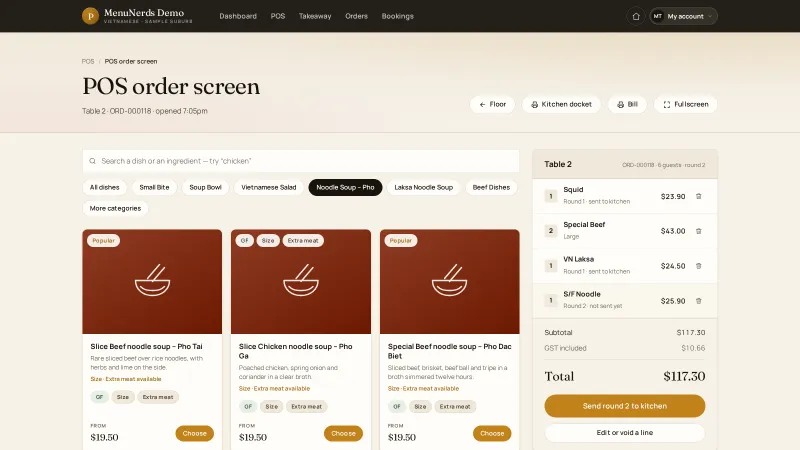
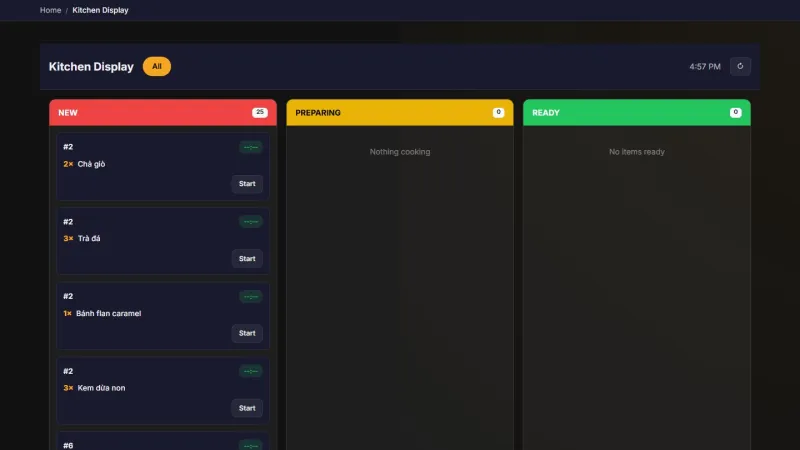
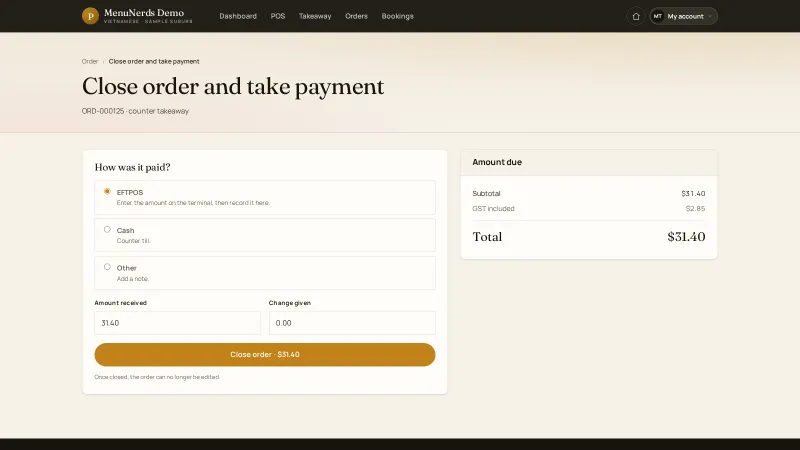
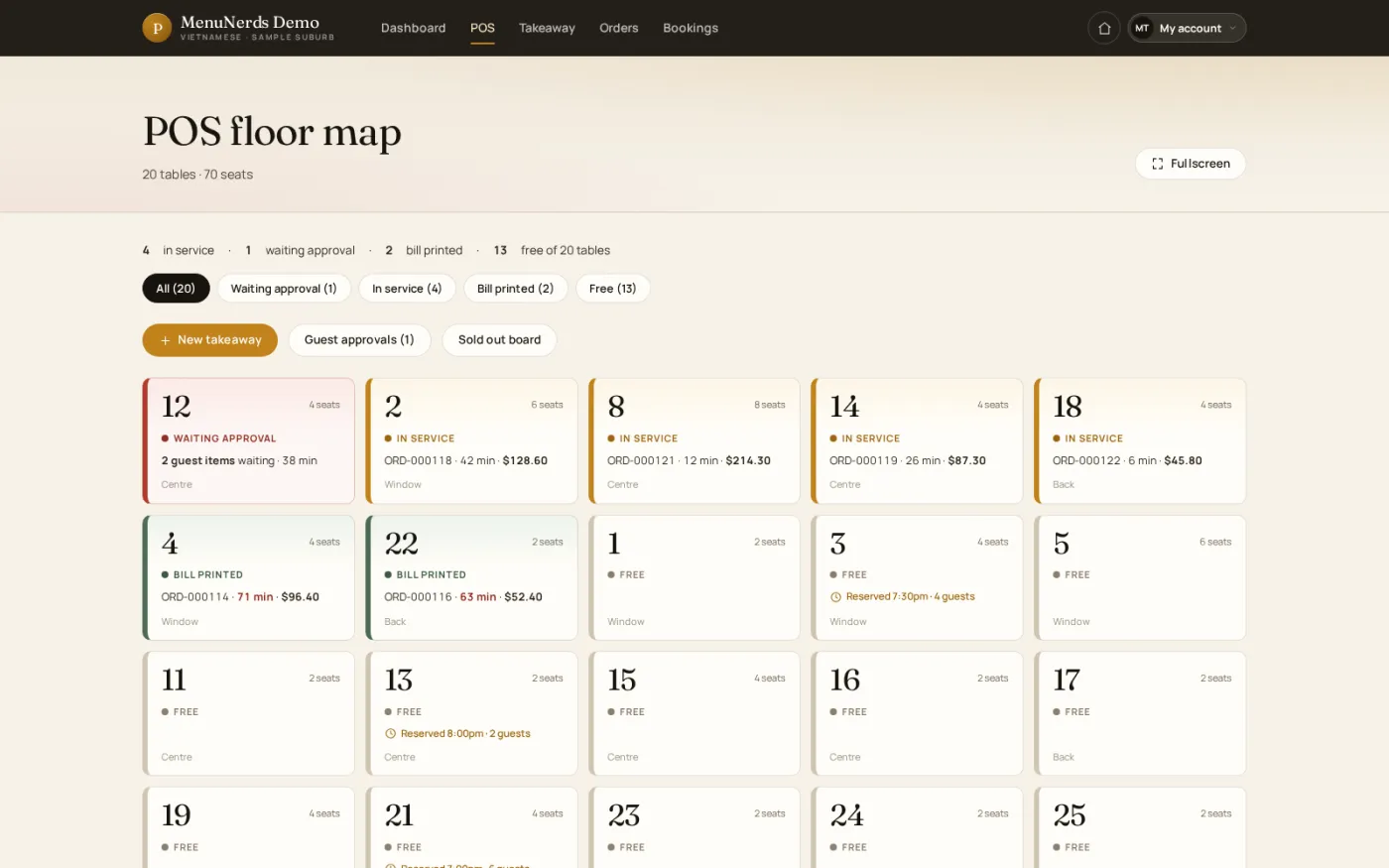
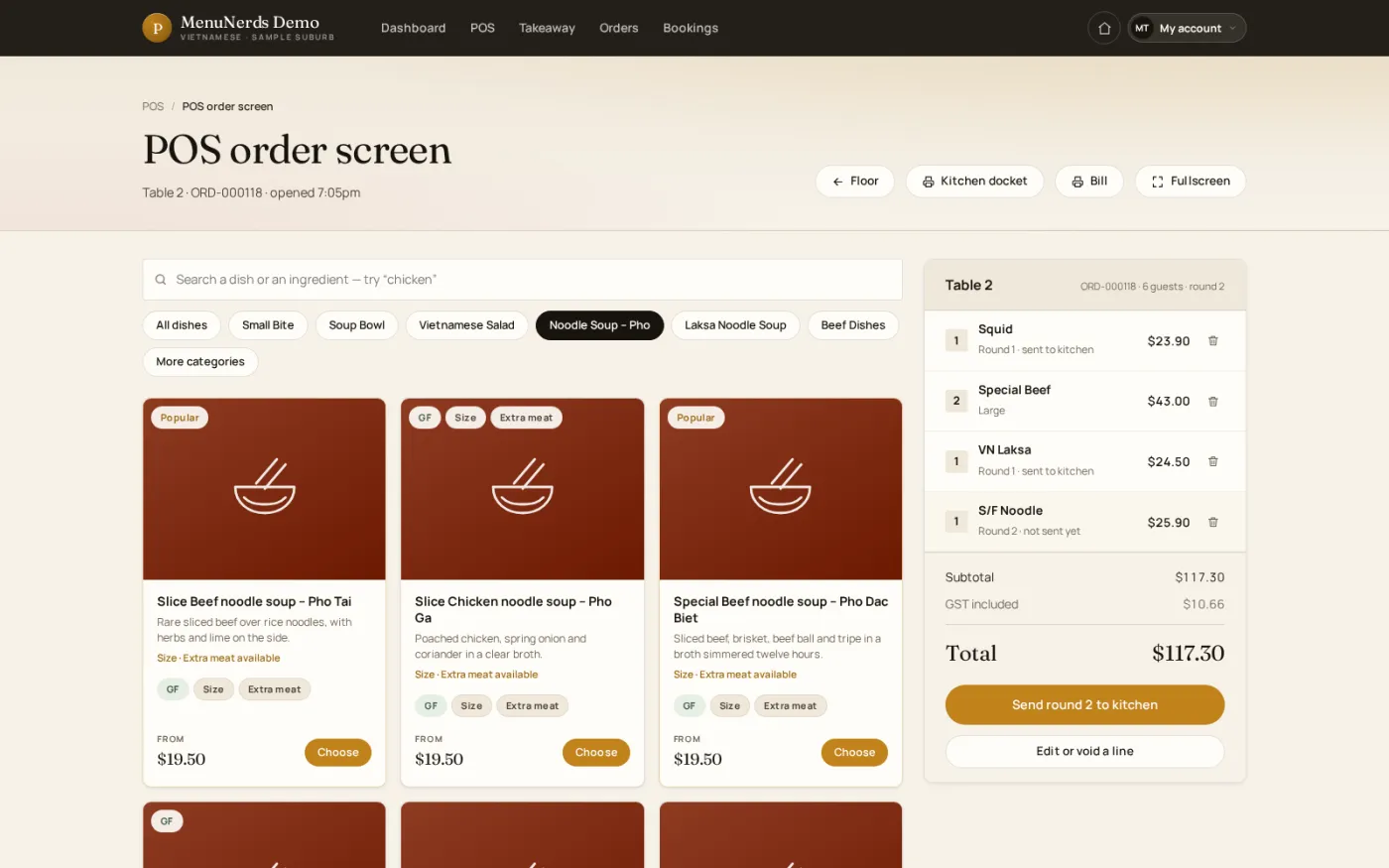
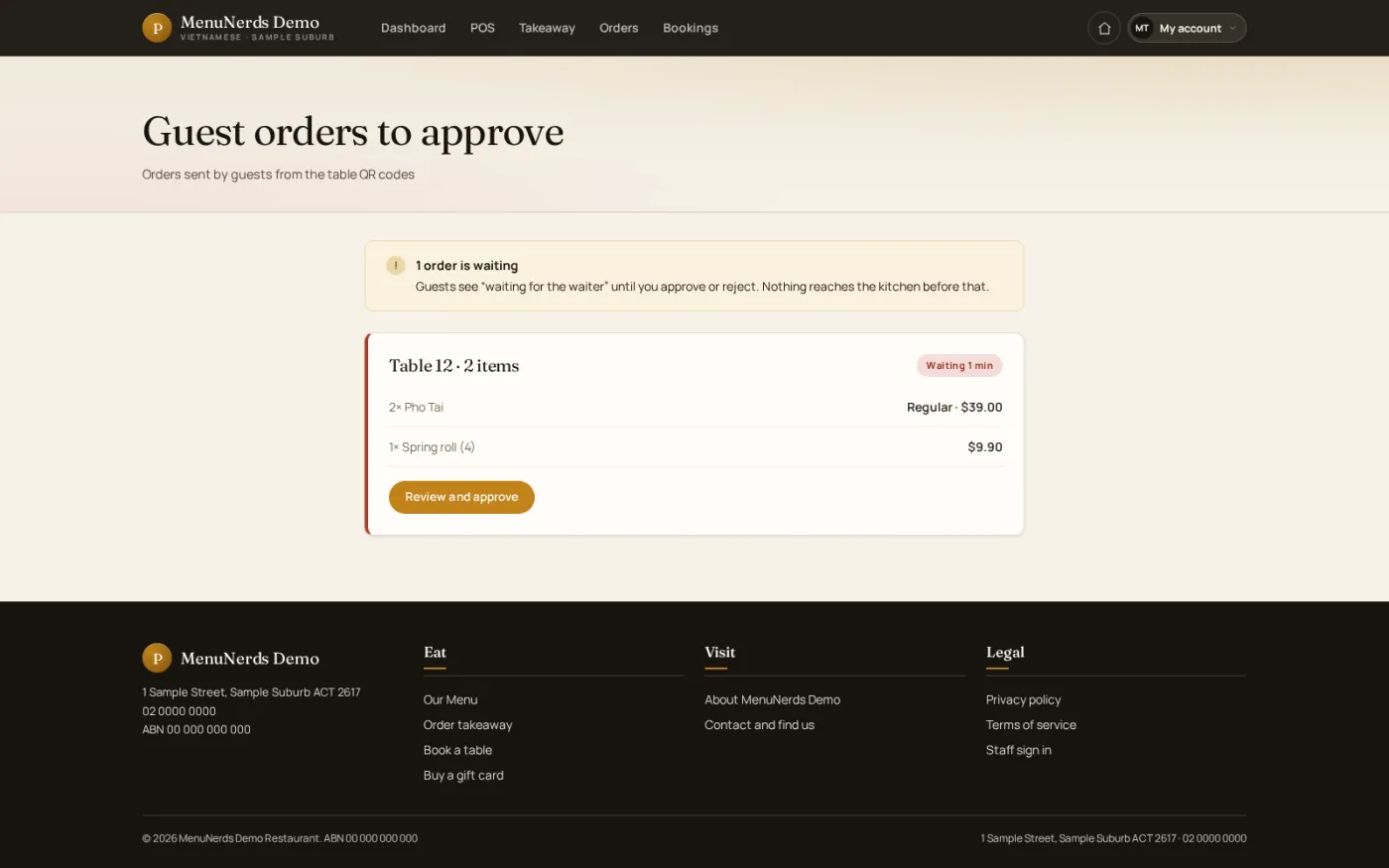
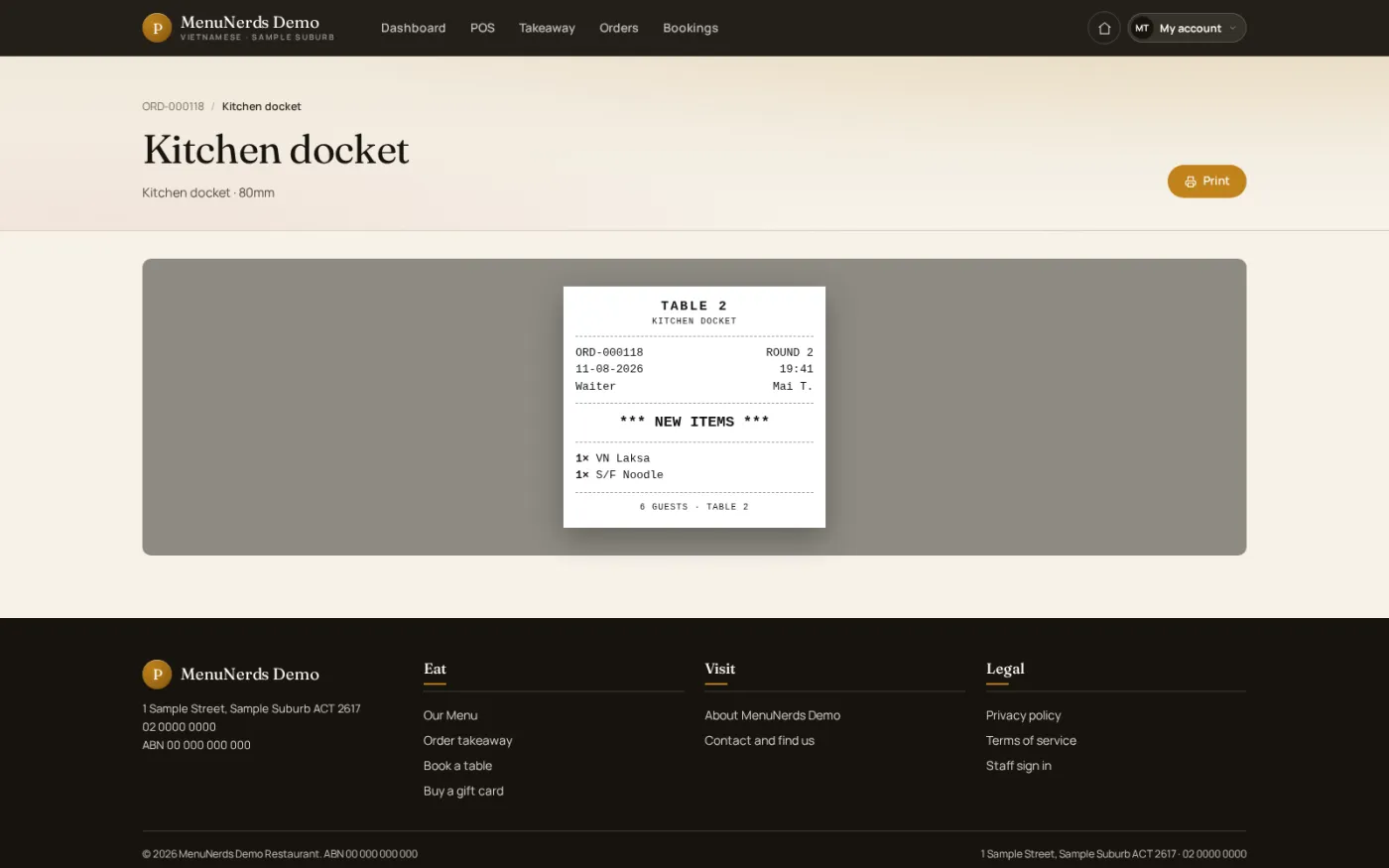
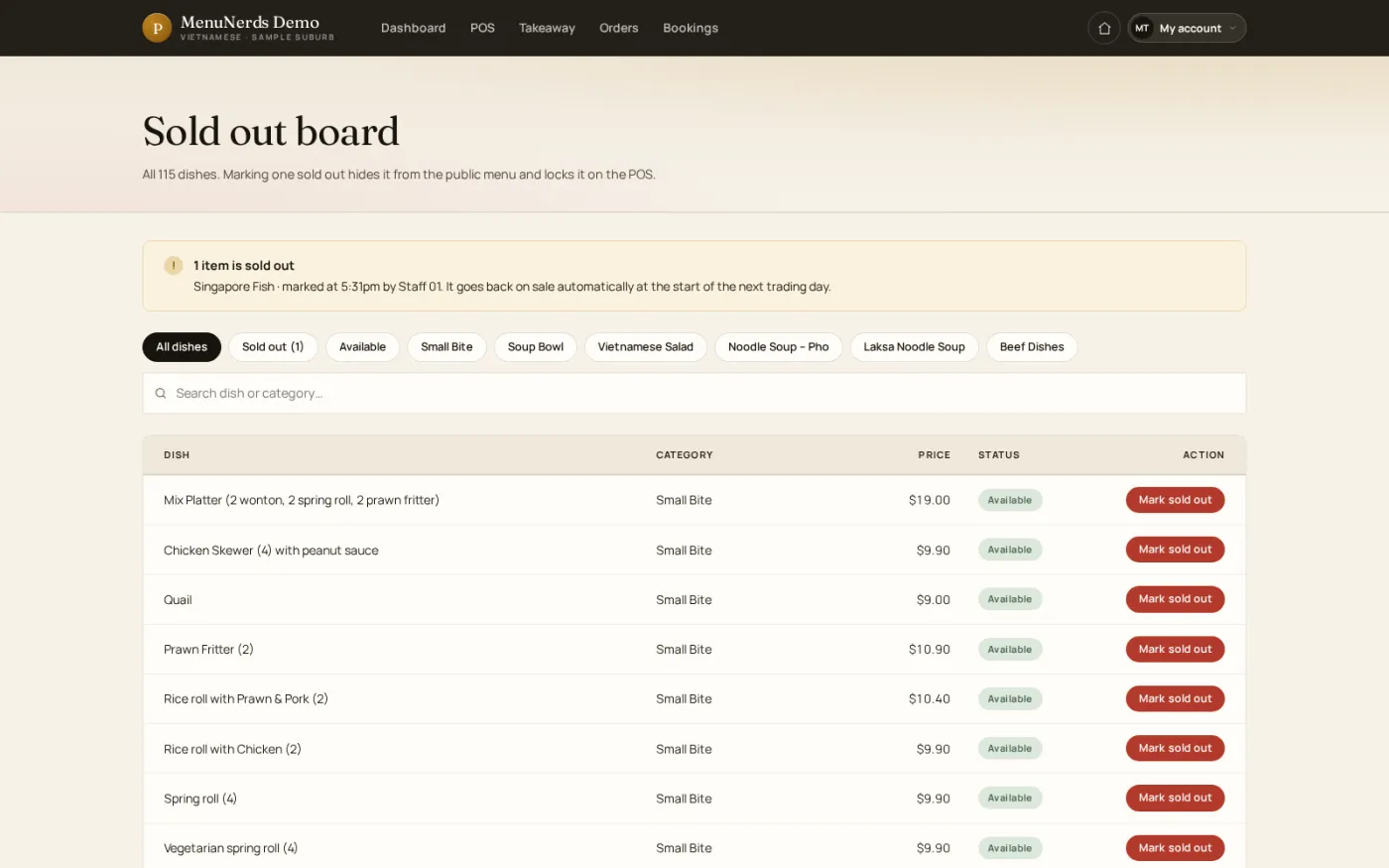
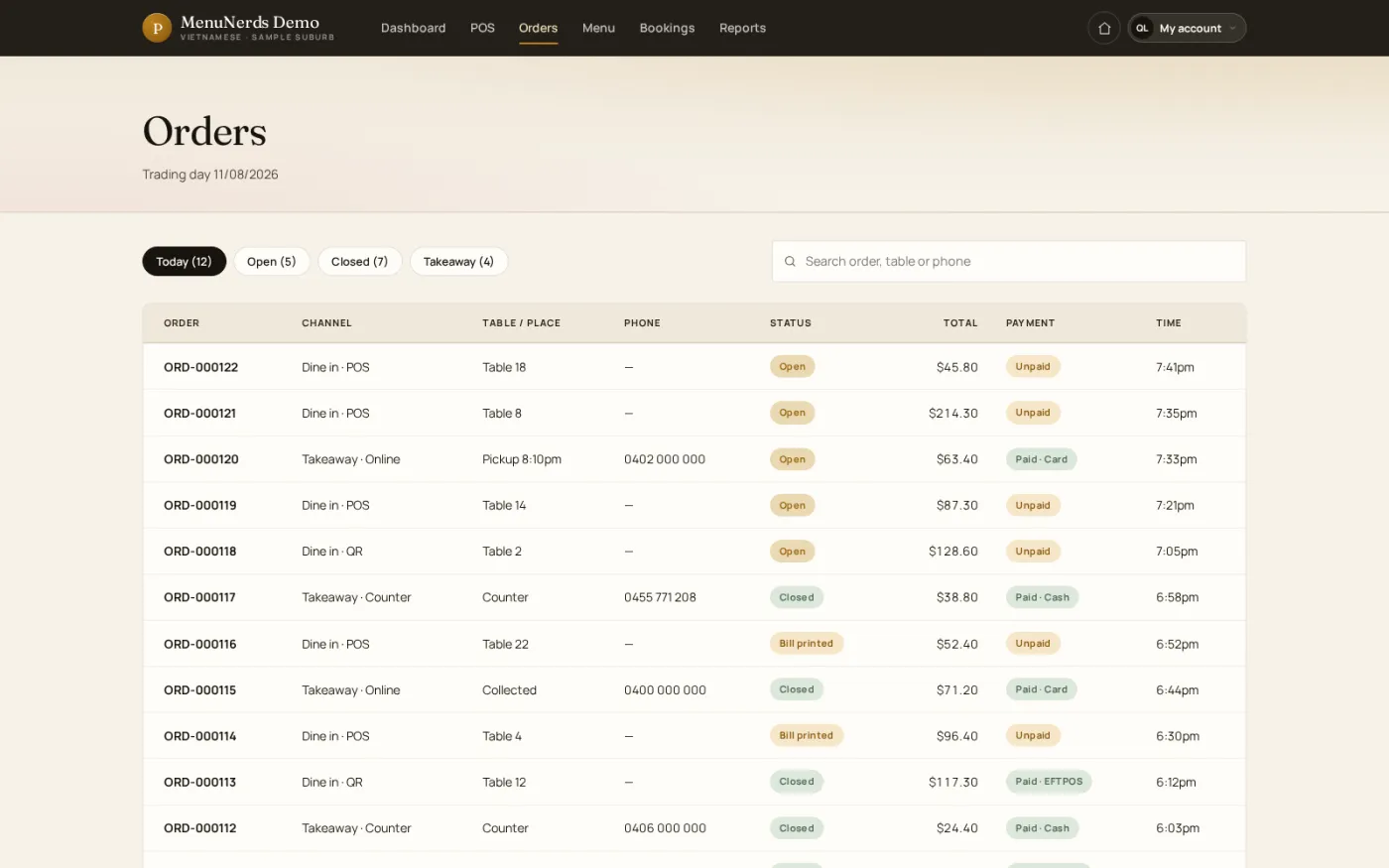
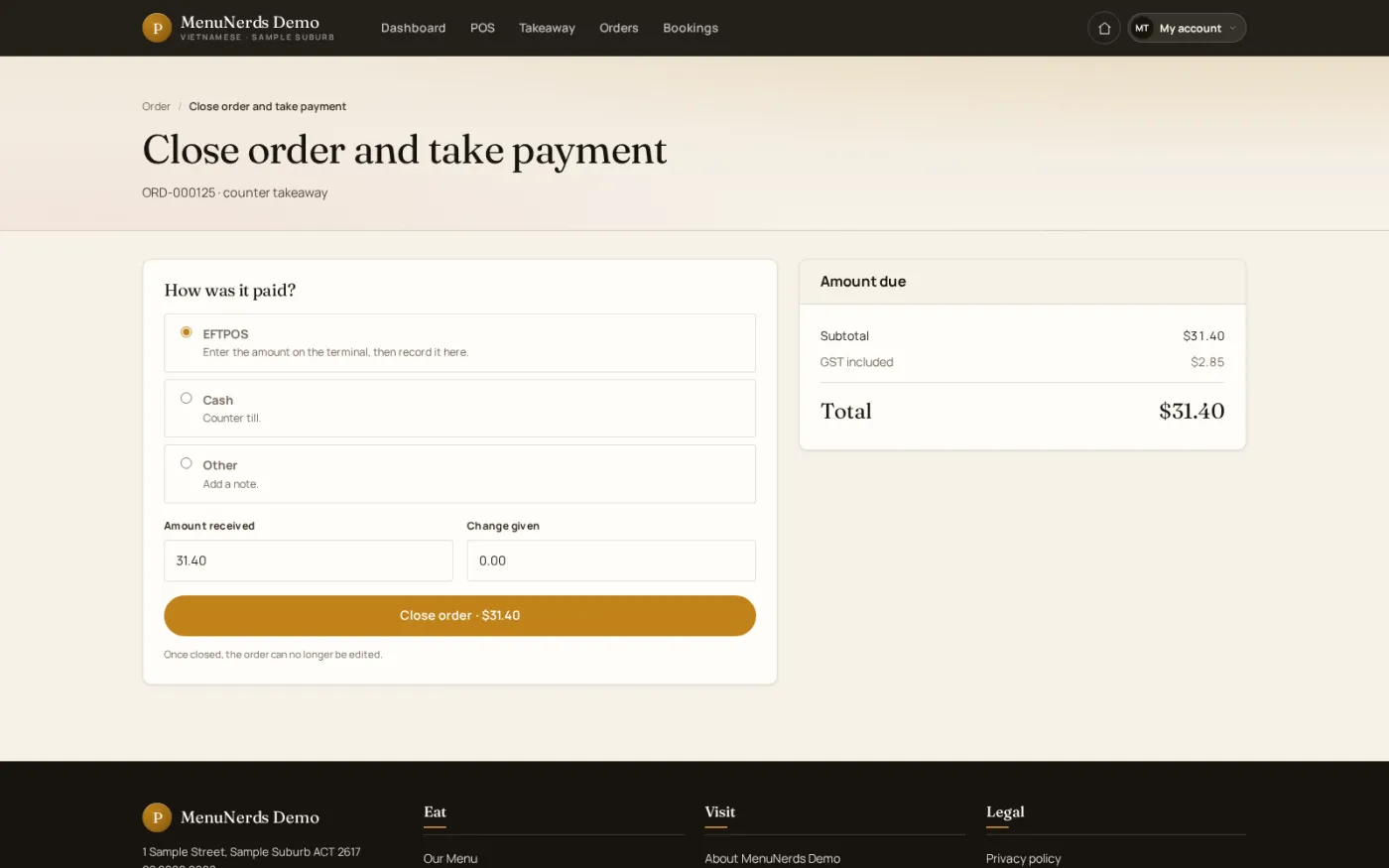
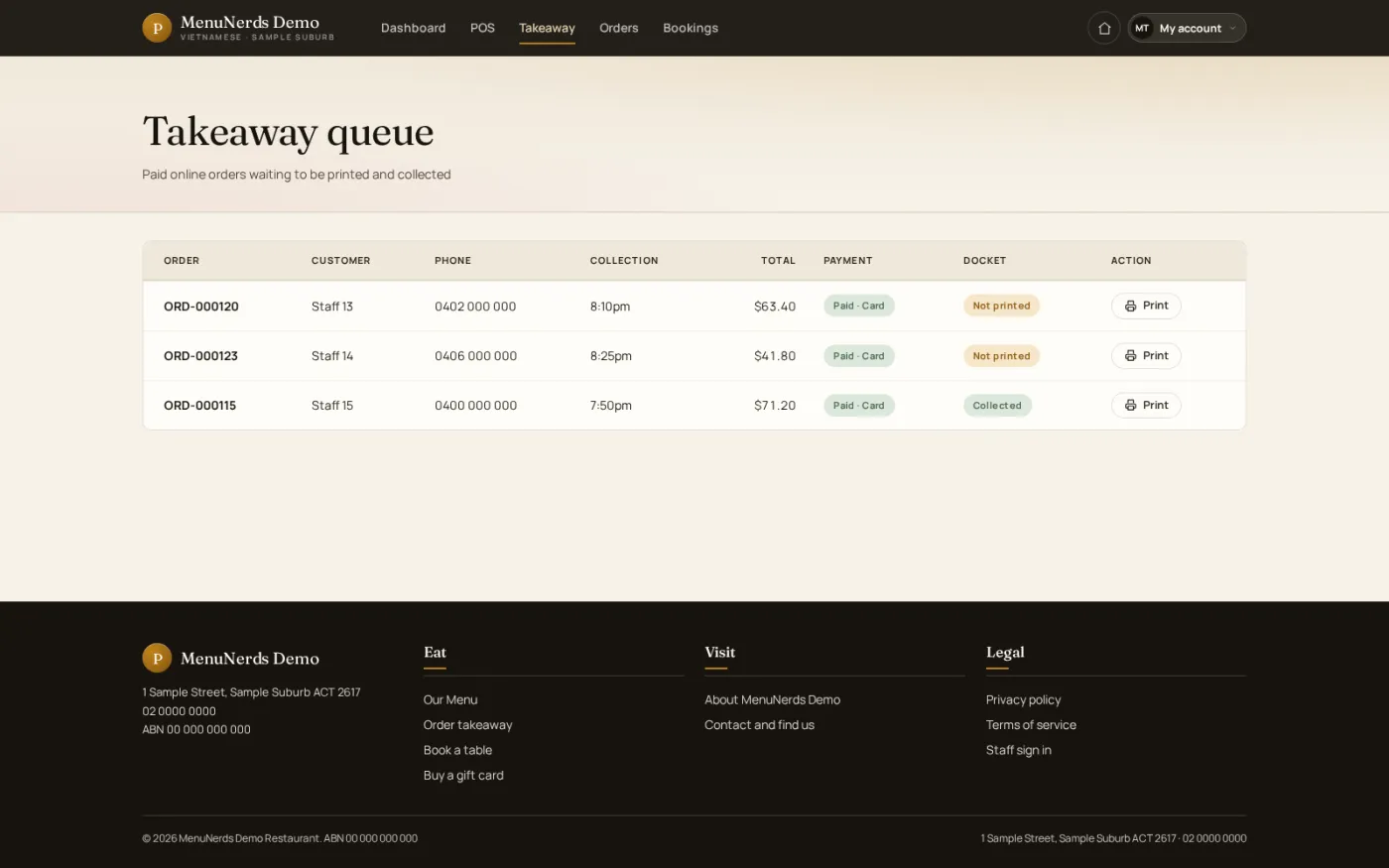
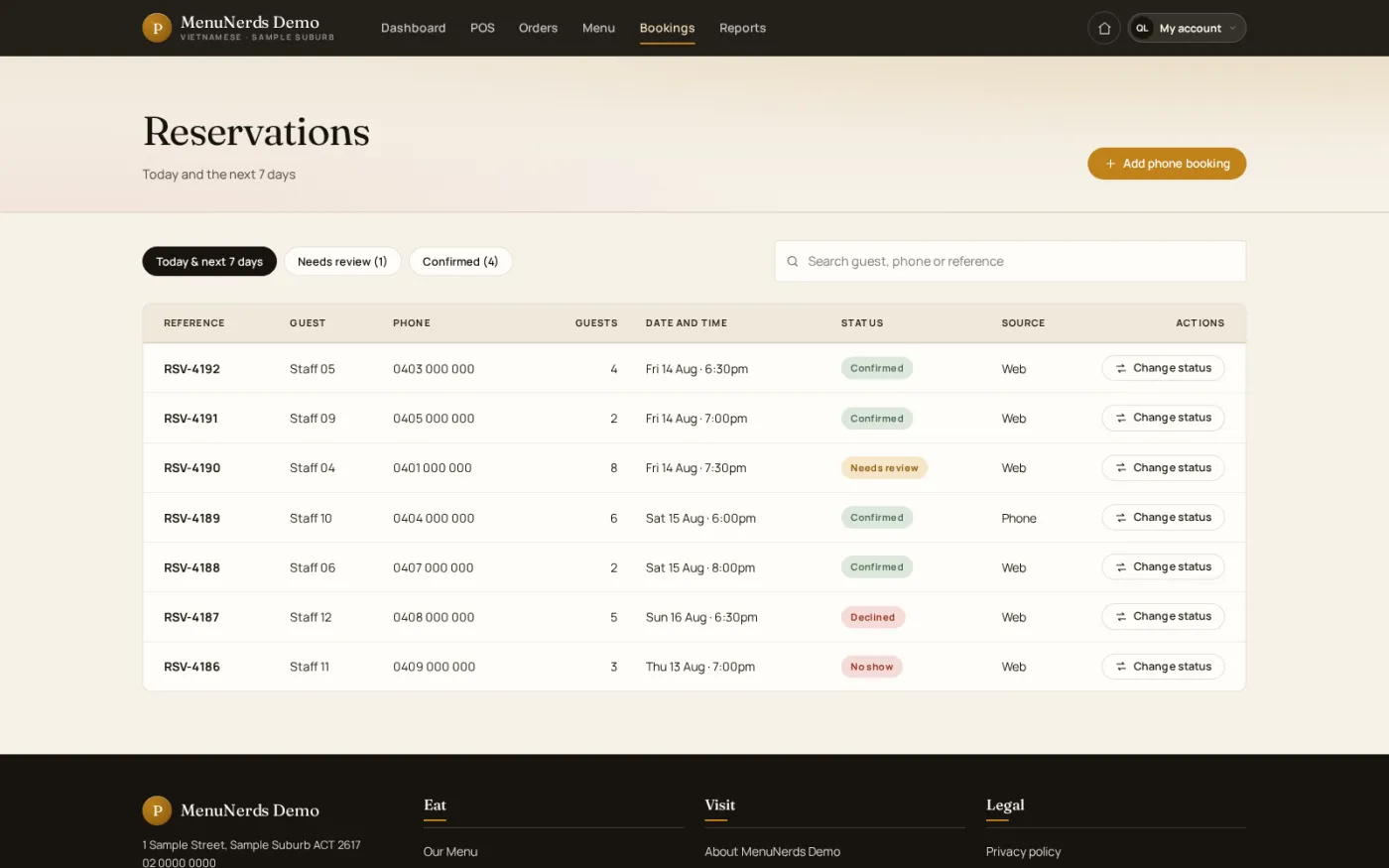
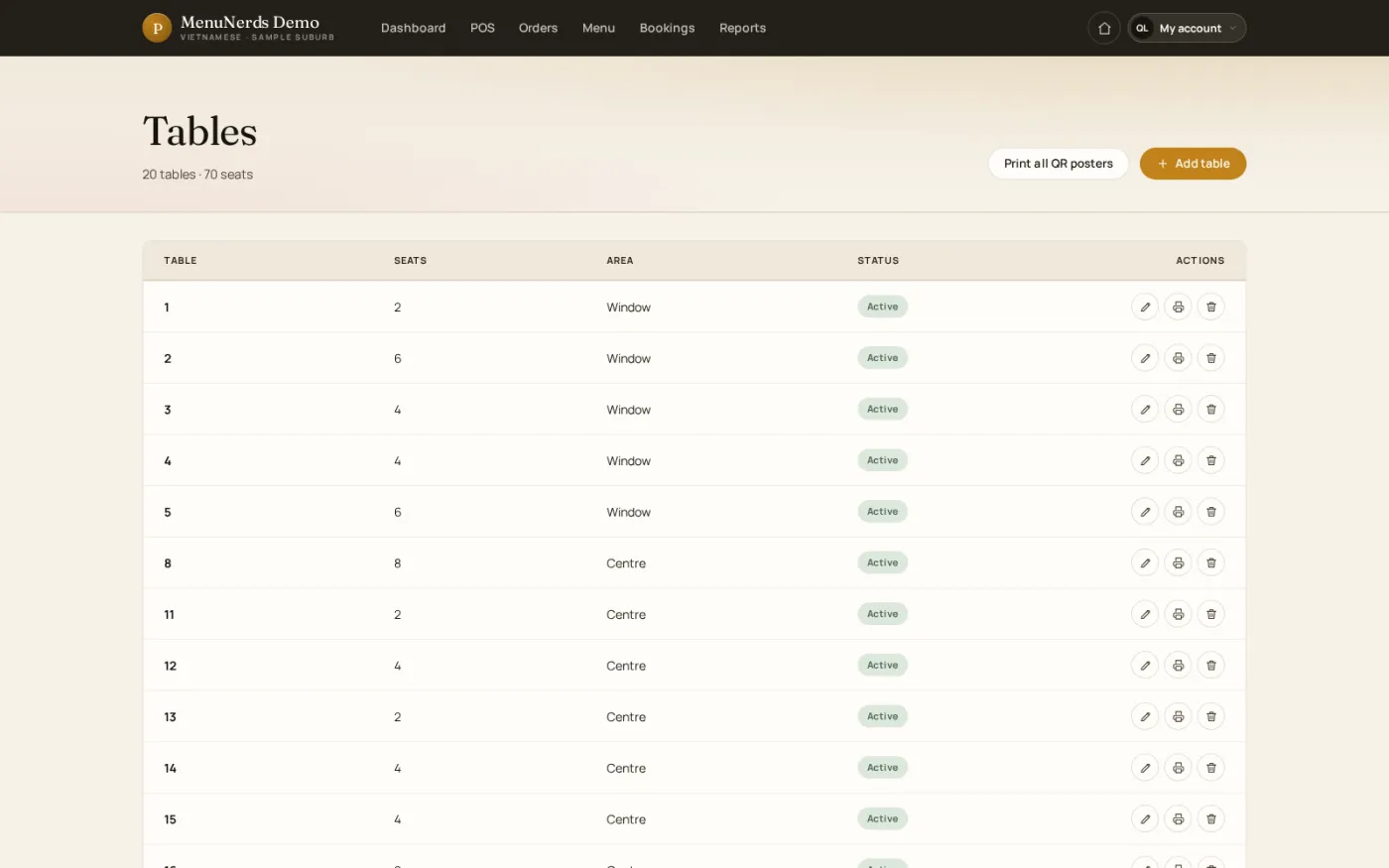
Waiters work from a table grid, open the order list and its detail, and create orders at the table. The kitchen display shows each order as it comes in and through preparation. Reception and the cashier take payment at the counter, including split payments, and keep the take-away queue moving.
For store and franchise admins
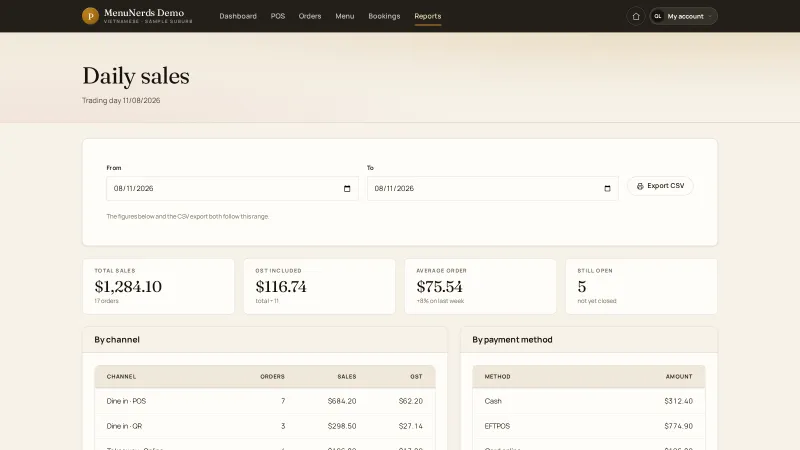
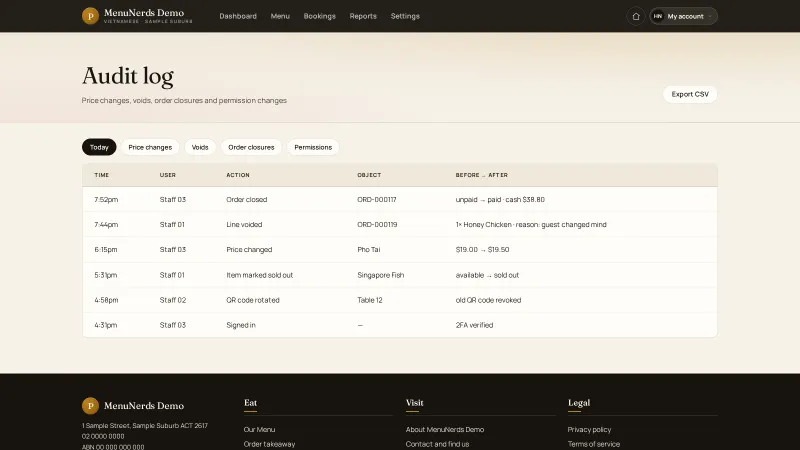
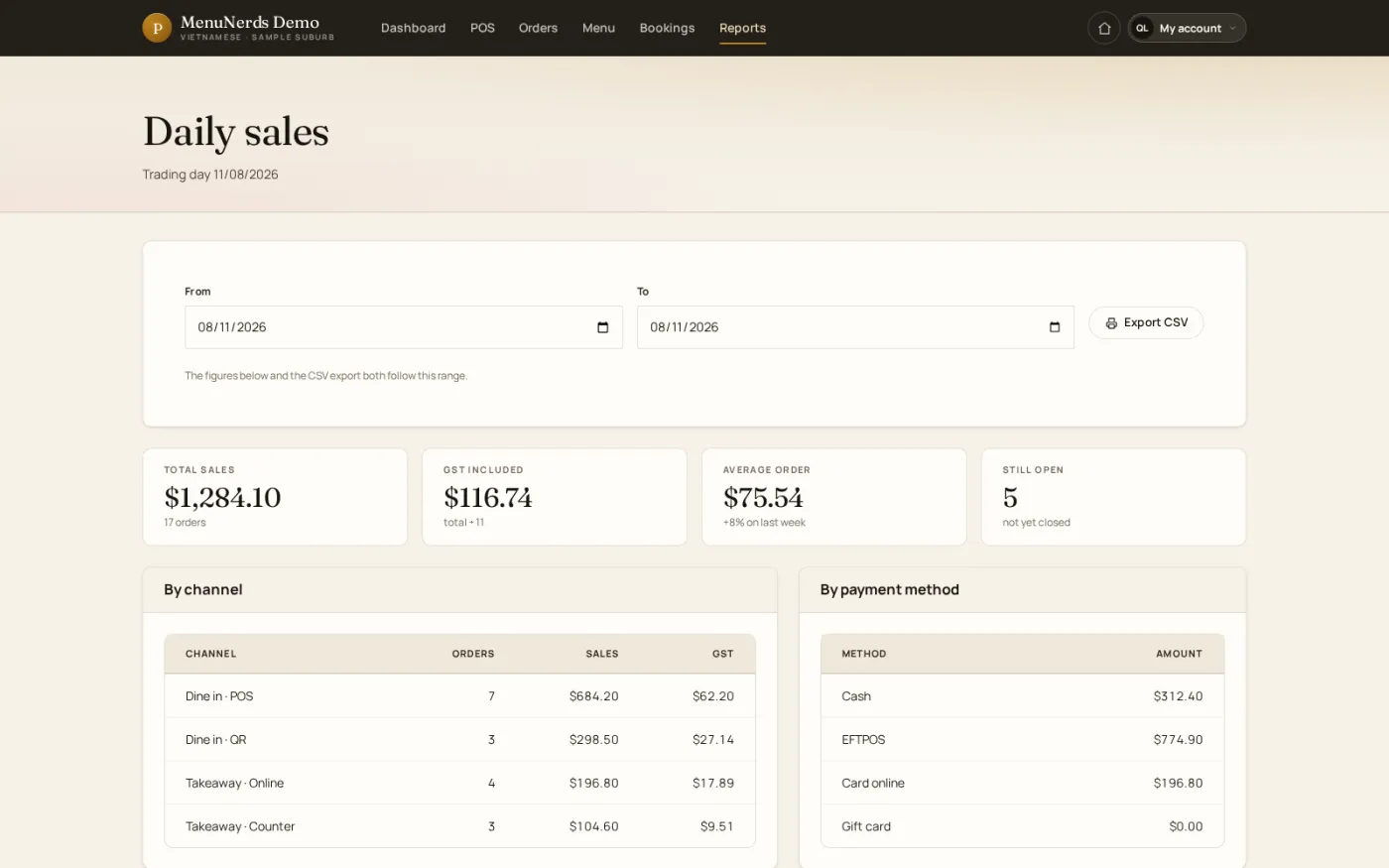
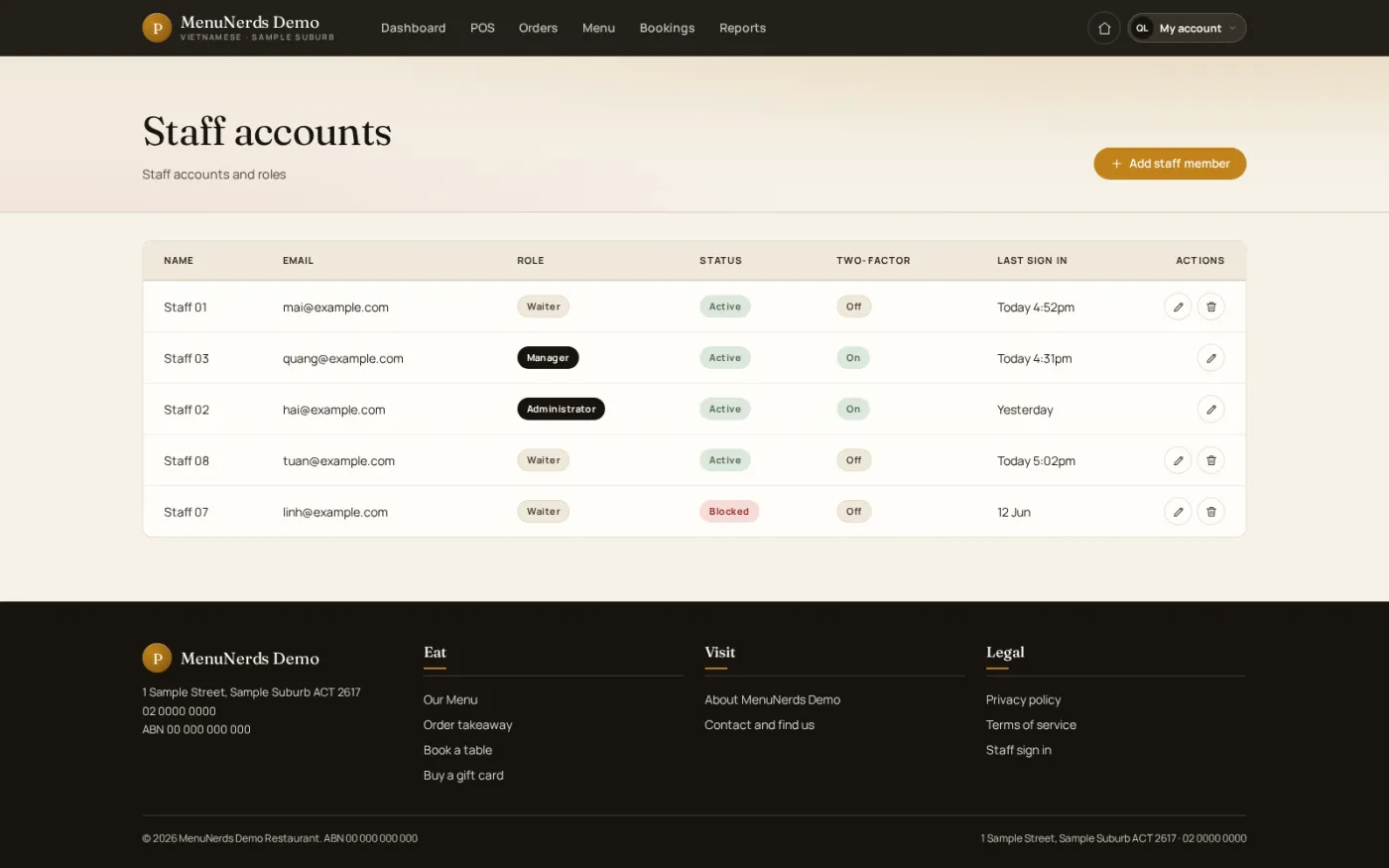
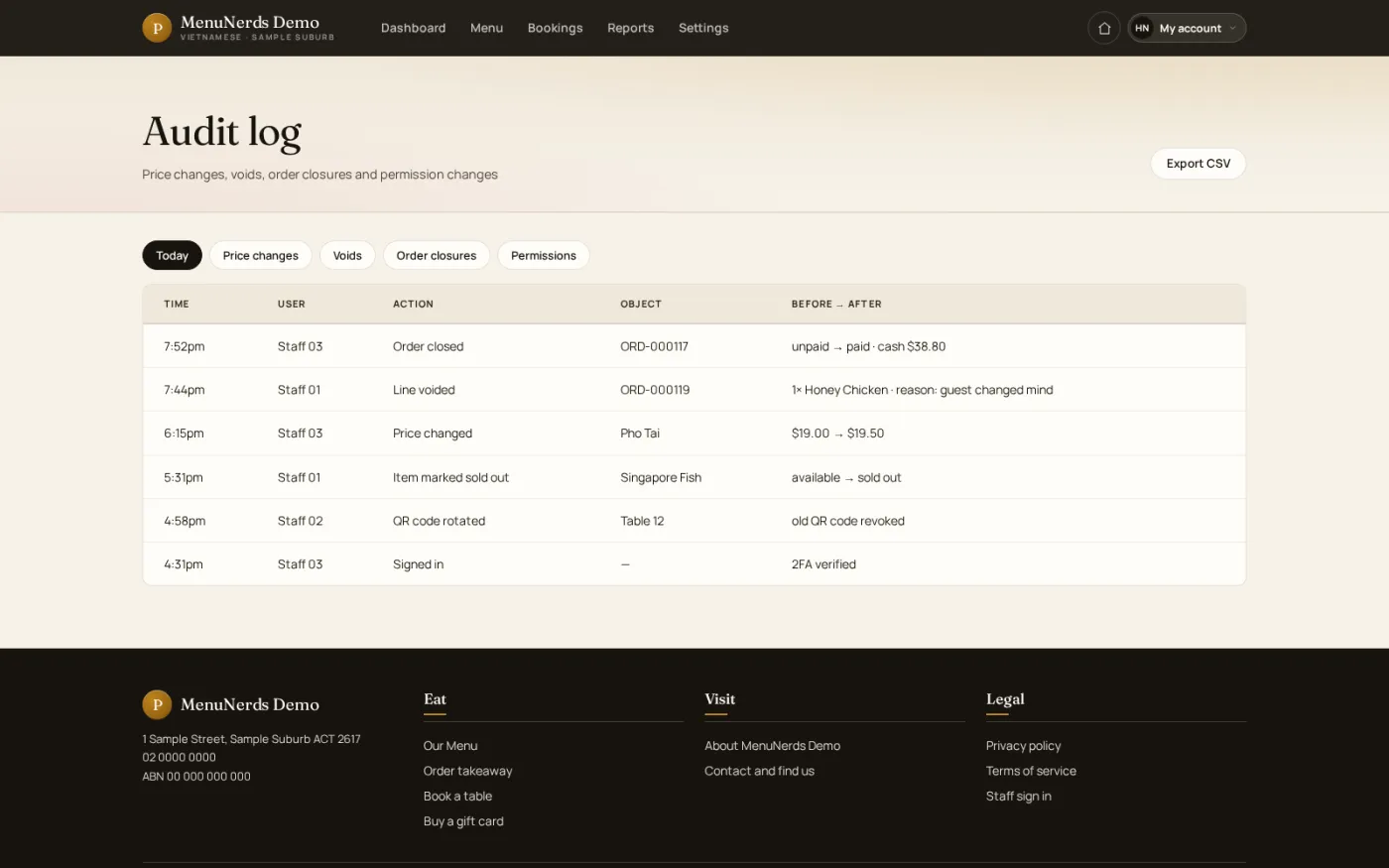
A store admin manages one branch's products, orders, inventory, promotions and delivery. A franchise admin handles the multi-store setup, staffing and revenue across the group. Finance reports, payment tracking, the audit log, suppliers and staff, system settings and role-based access sit with the admin roles, and each role sees only the navigation it needs.
Screens from MenuNerds
 View full size
 View full size
 View full size
 View full size
 View full size
 View full size
 View full size
 View full size
 View full size
 View full size
 View full size
 View full size
 View full size
 View full size
 View full size
 View full size
 View full size
 View full size
 View full size
 View full size
 View full size
 View full size
How we deploy and extend MenuNerds
A MenuNerds project starts from the version already in production, not from a blank build. We set up a demo environment and walk through it with you one role at a time, from the guest placing an order to the waiter's table grid, the kitchen display and the cashier taking payment, so you decide against something real rather than a feature list.
When we deploy MenuNerds for a group, the structure of the guest side is the first thing we set up with you: which brands and stores exist, where each one is and when it opens, which languages its guests read, and which categories and lists its menu carries. A store added later joins the same platform through the franchise admin's multi-store setup rather than as a separate site.
What usually changes for a restaurant or a group is the operation around the ordering: the menu and promotions, the store structure from a single site to a chain with a subdomain per store, the tables the waiter grid shows, payment at the counter, delivery, the reports finance needs, which staff roles exist and what each one sees, your branding and domain, and connections to a payment provider, an ERP or other systems you already run. Customisation is kept apart from the platform core, so a core upgrade does not overwrite it. For a group commissioning restaurant ordering platform development, that work is a development project like any other we run; the order of the work and the fit report are set out in how a platform implementation runs.
Restaurants, hotels and tourism operators are covered together on the hospitality and tourism page.
For agencies
If your agency's client runs restaurants, we deploy and adapt MenuNerds together with you, under your name, and your client receives the running system and its source code. You keep the client relationship; the partner programme sets out how a platform partnership works.
Hosting, source code and warranty
MenuNerds can run on your own servers or cloud account, or on infrastructure we operate under a managed hosting agreement, and the choice can be reversed later because nothing proprietary runs on it. You receive the whole running system and its source code, and what we build for you on top of the platform is assigned to you with its source code: what you own.
Development work carries our warranty, one year by default and up to three, agreed in the contract before work starts. The team that built it fixes it. Updates after that sit in a separate support and maintenance agreement, and each role on your staff has a guide written for the job it does, listed below.
What it costs
A MenuNerds deployment is placed in the project tiers on the pricing page like any other build, by what the finished system has to do: the stores and roles, the integrations, the records to move and the languages. What already runs in the platform is not charged as if it were written again; the price is for the part built for you, fixed once the fit report is agreed. The tiers run from Micro to Strategic, and the fit report says which one your deployment is in.
Questions about MenuNerds
Can each store have its own site?
Yes. Each store runs on its own subdomain, with its own name, address, booking line, contact email, about page and contact form, and the QR code at each table leads to that store's menu.
Can we add stores later?
Yes. A new store joins the same platform through the franchise admin's multi-store setup, on a subdomain of its own, rather than being built as a separate site.
Which languages can guests order in?
The storefront switches language, and its page addresses change with the language as well as the text. The running version is in English and Vietnamese; the languages your guests read are agreed when your stores are set up.
Can MenuNerds connect to our payment provider or ERP?
Yes. Connections to a payment provider, an ERP or other systems you already run are part of a deployment, specified in the fit report before the price is fixed.
Where are orders and customer records kept?
On the system you choose to run it on: your own servers or cloud account, or hosting we operate for you. Each deployment is a system of its own, so orders, customer accounts and reports stay in your database.
Tech stack
- Drupal 11
- PHP 8.3
- Bootstrap 5
- SCSS
- jQuery
- MySQL