
Industry

Corporate Web Platforms on Drupal

Custom web applications, multi-service company sites and staff intranets, built on Drupal and handed over with their source code.

An engineer reads it and replies within one business day.

  • Built for CreAct and H&N Corporation
  • Both maintained by us
  • Warranty of 1 to 3 years

Who we build this for

  • Enterprises
  • SMBs
  • Operations managers
  • IT departments

Case studies

What have we delivered for enterprises?

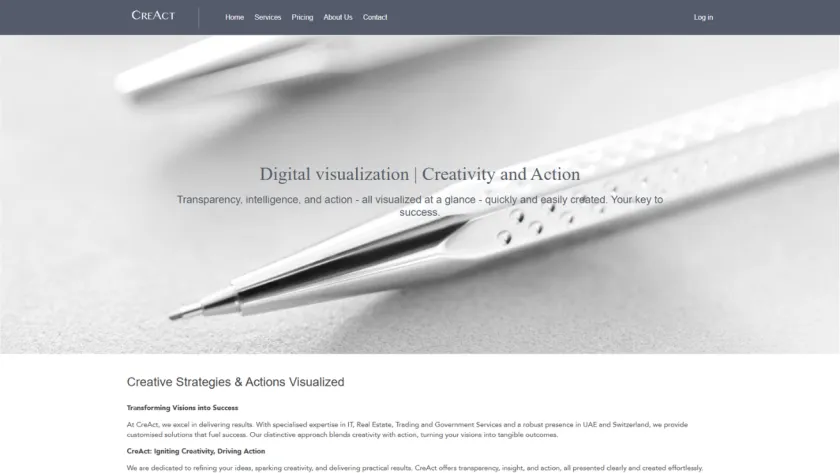
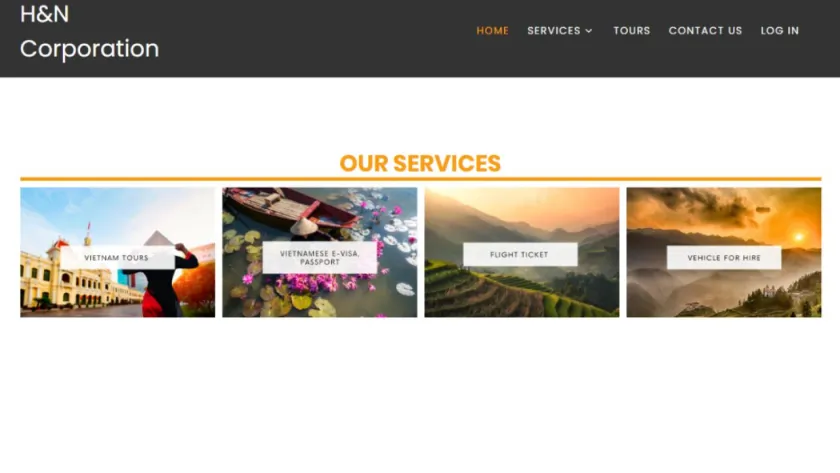
CreAct, a strategy consulting business serving companies in the UAE and Switzerland, runs the custom application we built for it at creact.ae: CreActionBox for standardising business processes and iCAB for visualising strategy. H&N Corporation, an Australian company with branches in several cities, runs its service lines and its online visa and passport applications on the site we designed and built at hnncorp.com.au. We maintain both.

Konrad Schwitter, Project Owner at CreAct, wrote this for our reviews page:

Working with the WeebPal development team has been a real pleasure. For creact.ae, they built us a completely custom, highly tailored application that truly has its own unique character.

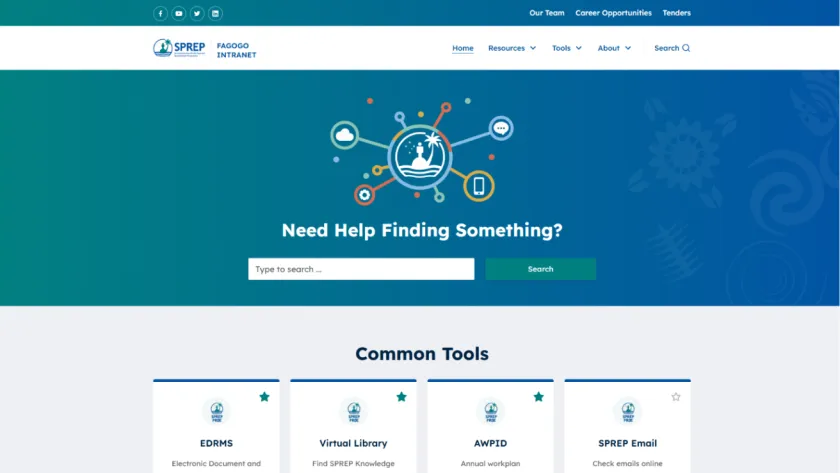
The staff intranet above, Fagogo, was built for an intergovernmental organisation rather than a company; what it has to do for staff is the same.

See more of the work

What shapes the work

Why do internal systems get worse over time?

Almost no organisation sets out to build a fragmented internal estate. It accumulates, one reasonable decision at a time, and the symptoms are consistent.

  • The same fact lives in four places.

    A customer record in the CRM, the billing system, a shared spreadsheet and somebody's inbox. Nobody can say which is right, so everyone keeps their own copy, which makes it worse.

  • Process lives in people, not systems.

    The approval chain works because a particular person knows who to ask. That is not a process, it is a dependency.

  • Reporting is assembled by hand.

    If the monthly figures take two days to compile, they are two days old before anyone acts on them, and nobody questions them because re-deriving them costs two more days.

  • Tools that cannot be changed.

    A SaaS tool that does eighty per cent of the job and cannot be made to do the remaining twenty leaves the twenty per cent in spreadsheets, permanently.

  • Service lines scattered across sites.

    A company that grew one line of business at a time often has a site or a form for each, and a customer who comes for one service never finds the others.

The commercial version of the same problem is licence exposure: per-seat costs that scale with headcount, and a platform you cannot host or modify, which turns every renewal into a negotiation you are on the wrong side of.

How we build it

What do we actually build for enterprises?

Internal systems and the sites around them. Each kind of work below has a published case study behind it.

  • Custom web applications

    An application built from scratch around the way a business works, with several companies on one system and permissions of their own for each. That is what we built for CreAct, and it is our custom web application work: roles, approvals, audit trail and integrations with the systems you run.

  • Multi-service company sites

    One site that brings a company's service lines together under one navigation, with applications made online behind an account. For H&N Corporation that meant visa and passport applications with documents uploaded per service, a status the applicant can follow and an administration area where staff process each one: our website development work.

  • Staff intranets

    One place behind a staff login for policies, templates, meeting minutes and the internal systems people use every day, as in Fagogo, the intranet we built for SPREP staff: our intranet and portal work.

What happens to the licence question?

It disappears. Everything is built on Drupal and open-source infrastructure and handed over as source: application code, custom modules, theme, build tooling and deployment configuration. There is no per-seat fee on your own internal system and no annual renewal required to keep it running, so the cost of the platform does not scale with your headcount. That position is set out in full on you own what we build.

How is this engaged and priced?

A custom platform engineered to specification sits at the Enterprise size, and multi-workstream programmes with legacy migration and formal governance sit at Multi-Entity or Strategic. The sizes, the milestone payment structure and the prototype at no charge that comes before any contract are all on our pricing page.

Development work carries a warranty of one year by default and up to three, worked by the team that built the system (covered and not covered), and continuing operation runs under a separate support and maintenance agreement.

Where should an enterprise start if the estate is already fragmented?

Not with the biggest system. Start with the fact that is wrong in four places, and decide which copy is going to become authoritative. That decision is organisational rather than technical, it cannot be made by a supplier, and an internal project that skips it tends to stall on it later.

Once there is an authoritative source, the sequence is usually: expose it through one system that people actually use daily, integrate the next system against it rather than against a spreadsheet, and only then retire the copies. That order keeps each step independently useful, which matters because internal programmes lose their sponsor more often than they lose their budget.

Our part starts with a requirements session and a mindmap of what the system has to do, then a working prototype on your real data. For larger programmes the architecture, integration map, phased plan and risk register are also worked out before the contract, without an invoice. Questions that come up before that are answered on our FAQ page.

See it working before you commit

We build a working prototype first, so you decide against something real.

  • Full source code, handed over
  • Price fixed once the architecture is agreed
  • Warranty of 1 to 3 years