Industry

Hospitality and Tourism Web Development

Hotel booking, restaurant ordering, ticketing and destination sites for hotels, restaurants, tour operators and tourism boards, deployed from platforms already in production.

An engineer reads it and replies within one business day.

  • MineRooms live at mine-rooms.com
  • MenuNerds in production in Australia
  • Source code with every deployment

Who we build this for

  • Hotels
  • Resorts
  • Restaurants
  • Cafes
  • Travel agencies
  • Tourism boards
  • Destination marketing orgs

Case studies

What have we delivered in this sector?

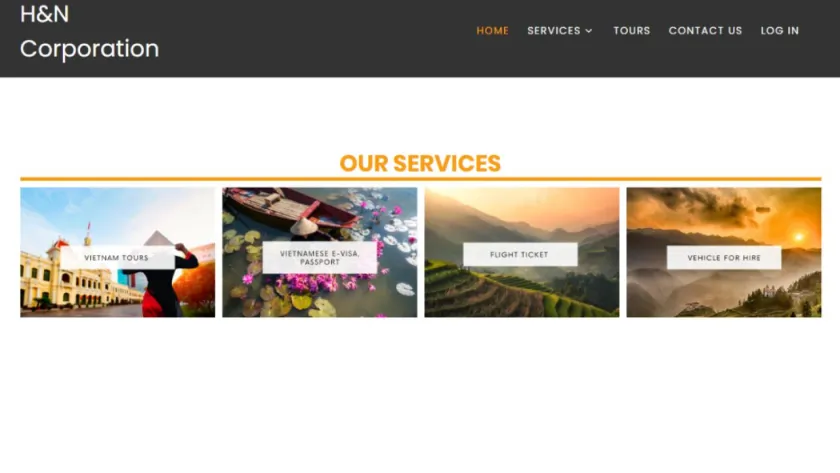
For travel services, the published case study is H&N Corporation, an Australian company whose site we designed, built and maintain. It brings H&N's tours, grouped by destination, its short-term accommodation in Canberra, its vehicle hire and its visa services together on one site, with visa and passport applications made online. The flight search on that site is not our work.

Our platforms carry the rest: MenuNerds is in production for a restaurant franchise in Australia, MineRooms runs live at mine-rooms.com, MineTickets at mineticket.com, and OpenDestinations at opendestinations.org. Each platform page covers what is already built.

See more of the work

What shapes the work

What makes hospitality systems fail in practice?

Hotels, restaurants and tour operators rarely fail on features. They fail on the seams between systems, and those seams are busiest at exactly the moment failure is most expensive: a full house, a full dining room, a coach party arriving early.

  • Double bookings under concurrency.

    Two guests reaching for the last room in the same second is not an edge case, it is a Friday. If a booking is only reserved when payment completes, the gap between the two is where the double booking lives.

  • Channel dependence.

    Distribution through the large travel agencies brings volume and takes margin, and the commission is not the only cost: the guest relationship and the data go with it. Direct booking has to work well enough to be worth defending.

  • Front of house and back of house drifting apart.

    A reservation system that does not reach the room board, the kitchen display or the housekeeping task list just moves the coordination problem onto staff.

  • Pricing that has to change fast.

    Seasons, events, mid-week gaps, last-minute inventory. Pricing that requires a developer is pricing that does not get changed.

  • Language and currency.

    Guests arrive from everywhere. Multilingual content and multi-currency payment are structural decisions, not a translation pass at the end.

How we build it

How do we approach hospitality builds?

We work from platforms already running in production rather than starting each property from zero, and deploy them as a platform implementation: your rooms, menus or venues set up on the platform, customised for how you work, and handed over with the source code.

  • Rooms and reservations

    MineRooms joins direct booking on your own domain to the operations that follow it: the room board, in-room ordering, housekeeping, pricing schedules and reporting, with the branches of a hotel group run from one platform. A room is held while the guest completes checkout, so two guests cannot both book the last one. The point of the product is independence from the large travel agencies: direct booking that is good enough to send guests to.

  • Food service

    MenuNerds is restaurant ordering joined to the roles that have to carry it out: waiter, kitchen, reception, store admin, franchise admin and system admin. Each store runs on its own subdomain, which is what makes it workable for a franchise rather than a single venue, and it is in production for a restaurant franchise in Australia.

  • Ticketing and attractions

    MineTickets covers e-ticketing for venues, tours and events, and runs live at mineticket.com.

  • Destination data

    OpenDestinations, our free travel and tourism data platform, runs on Drupal 11 at opendestinations.org, for tourism boards, destination marketing organisations and travel businesses that have to present a region rather than one attraction at a time.

Which of our services does this work use?

What does an engagement look like?

Most hospitality work is product-based: start from a platform already in production, add your branding, your workflows and your integrations. Our pricing page puts that at the Small to Medium sizes for a deployment, moving to Large once the platform is extended well past its defaults. Before you commit, we build a working demo on your own data (your rooms, your menu, your rates), because a demo on sample data proves nothing about your operation.

You receive the full source code at handover (why we do that), and development work carries a warranty of one year by default and up to three (what that covers). Day-to-day running afterwards is support and maintenance, which is a separate arrangement from the warranty and is priced separately.

What should a hospitality operator decide first?

Before any software discussion: how much of your volume do you want coming through your own channel in two years, and what would have to be true for a guest to book there instead of through an agency. That answer sets the whole scope. It decides how much work goes into the booking experience, whether loyalty and repeat-guest data matter, and whether multi-currency and multilingual are launch requirements or later ones.

Then decide where the operational boundary sits. A reservation system that stops at the confirmation email is cheaper and leaves the coordination with your staff. One that reaches the room board, the kitchen display and the housekeeping list costs more to build and takes work off the floor every day it runs. Both are legitimate; choosing by accident is not.

We work through these in a requirements session before anything is priced, and the answers go into a prototype running on your own rooms, rates and menu. Questions that come up before that conversation are answered on our FAQ page.

See the platform running with your case on it

Tell us your use case and roughly how many users. We set your case up on the version in production and go through it with you one role at a time, before anything is signed.

  • Full source code, handed over
  • Price fixed once the architecture is agreed
  • Warranty of 1 to 3 years