

Case study
SPREP Virtual Library
SPREP's official repository for published knowledge, designed and built by us in Drupal, with catalogue records and search by programme, country and project.
An engineer reads it and replies within one business day.
The client
The SPREP Virtual Library belongs to the Secretariat of the Pacific Regional Environment Programme (SPREP), the regional organisation that Pacific governments and administrations set up to protect and manage the region's environment and natural resources. Inside SPREP, the library is run by the Information and Knowledge Management Centre (IKMC), a specialised environmental information and knowledge service for SPREP staff, programmes, projects and member countries.
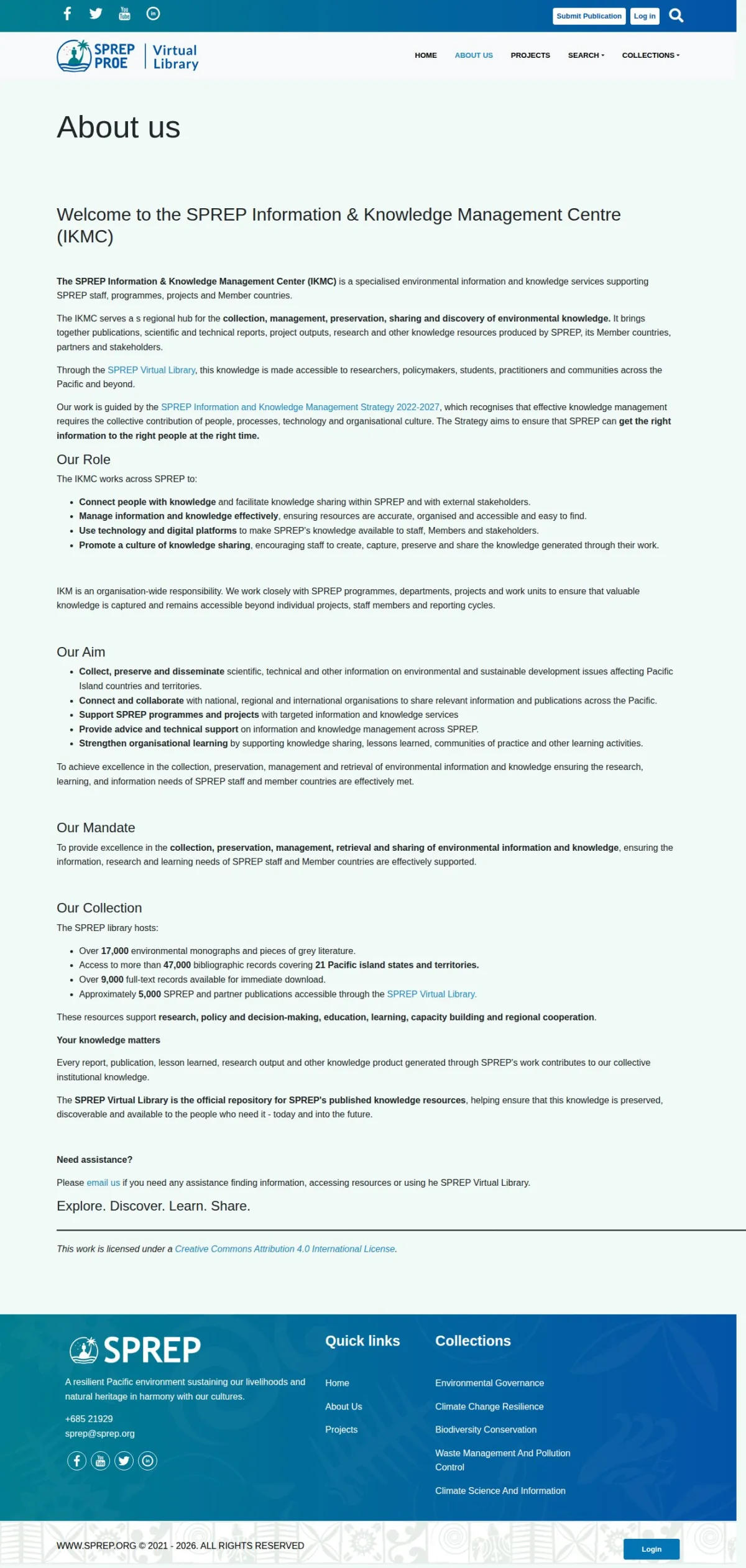
The IKMC describes itself as a regional hub for the collection, management, preservation, sharing and discovery of environmental knowledge. Its role, as it sets it out, is to connect people with knowledge, to manage information so that it is accurate, organised and easy to find, to use technology and digital platforms to make SPREP's knowledge available, and to promote a culture of knowledge sharing. Its collection brings together publications, scientific and technical reports, project outputs and research produced by SPREP, its members, partners and stakeholders: environmental monographs and grey literature, bibliographic records covering Pacific island states and territories, and full-text records ready for download. Its work follows SPREP's Information and Knowledge Management Strategy, whose stated aim is to get the right information to the right people at the right time.
The Virtual Library is how that collection reaches the public: researchers, policymakers, students, practitioners and communities across the Pacific and beyond. SPREP names it the official repository for its published knowledge resources.
The problem
The library's own pages set out the need it serves. The IKMC works with SPREP's programmes, projects and work units to make sure knowledge is captured and stays accessible beyond individual projects, staff members and reporting cycles. That knowledge is produced all over the organisation and the region, by programme teams, project teams, member countries and partners, and it has to end up in one catalogue where it can be found again.
What the site shows about that need:
- Records need proper catalogue data, not just a file: publisher, place, subjects, call numbers and the countries a publication concerns.
- People look for material along the lines SPREP works in: by programme, by member country and by project.
- Part of the collection is physical media. The library holds audio cassettes, videos, CD/DVDs and slides, and these have to be findable alongside new PDFs.
- Contributors outside the library team need a way to submit publications.
- The library also points to material held elsewhere, from external reports to peer-reviewed articles through Research4Life.
What we built
We designed and built the Virtual Library in Drupal for SPREP. It is a build of its own, not derived from the sprep.org base. What a visitor finds there today:
- A catalogue search box on the homepage, with general and advanced search behind it.
- Search results that narrow by collection, material type and keyword tag, with newest-first listings behind each "View more" link.
- A homepage that surfaces new SPREP publications, resources grouped by SPREP's programmes, knowledge products from SPREP projects, key SPREP resources such as its policies, the latest videos and new external resources.
- A clickable map of member countries for exploring resources by country.
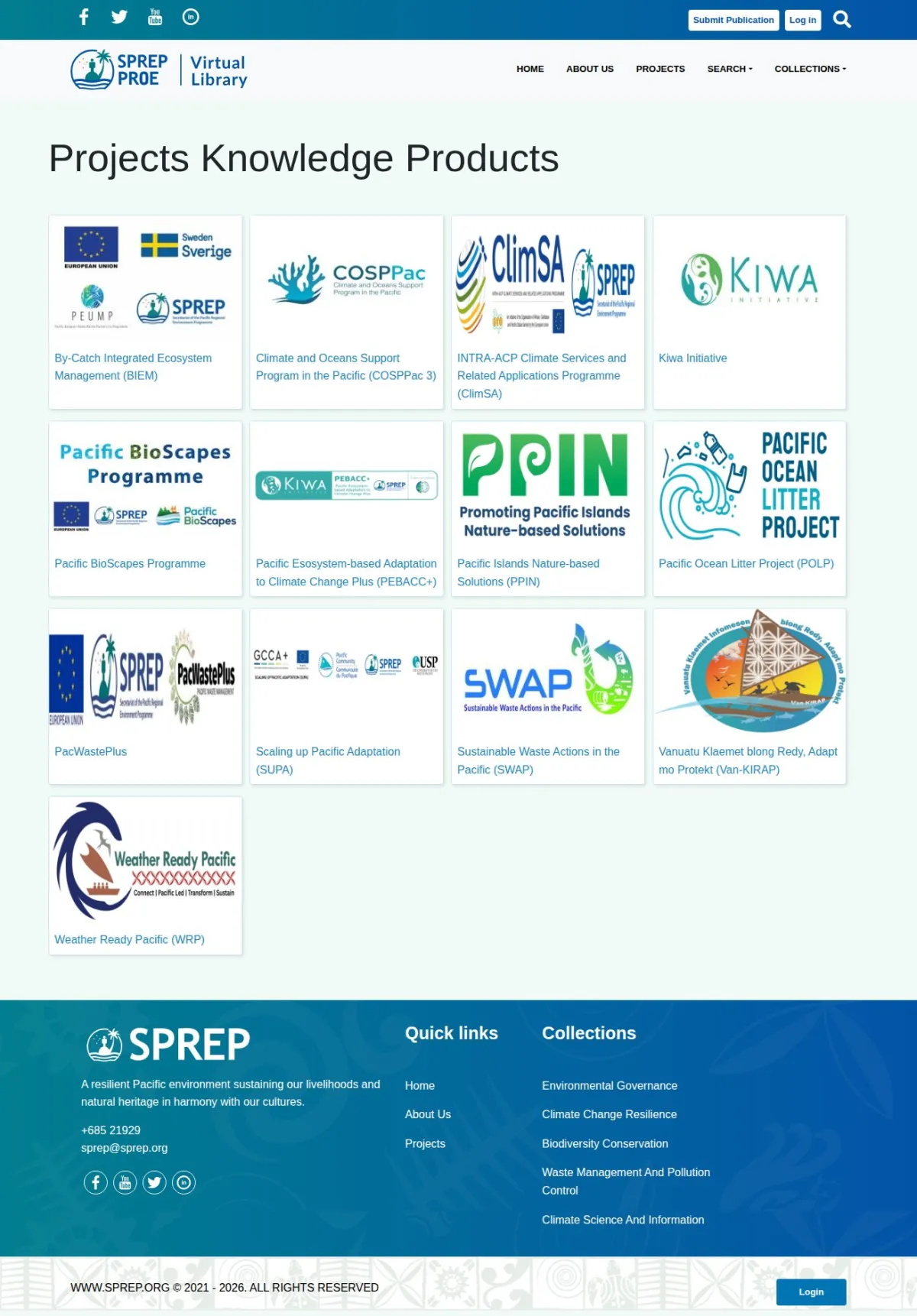
- A projects page listing knowledge products by project, from PacWastePlus and Weather Ready Pacific to the Pacific Islands Nature-based Solutions project.
- Curated collections, among them Ecosystem Based Adaptation, the Pacific Children's Environmental Collection, Traditional Knowledge, Marine Species, Oceans, Seabirds, Gender, and Threatened and Migratory Species.
- Anamua: Treasures of the Pacific Environment, a heritage collection browsable as audio cassettes, videos, CD/DVDs and slides.
- Full catalogue records: publisher, publication year and place, physical description, call number, relevant countries, collection, material type, language, ISBN, subject headings, abstract, linked projects and tags, with a download for the digital copy and a list of related resources.
- A Submit Publication entry point behind a log-in, so registered contributors can add records directly.
- An About page for the IKMC, with contact details for help finding material.
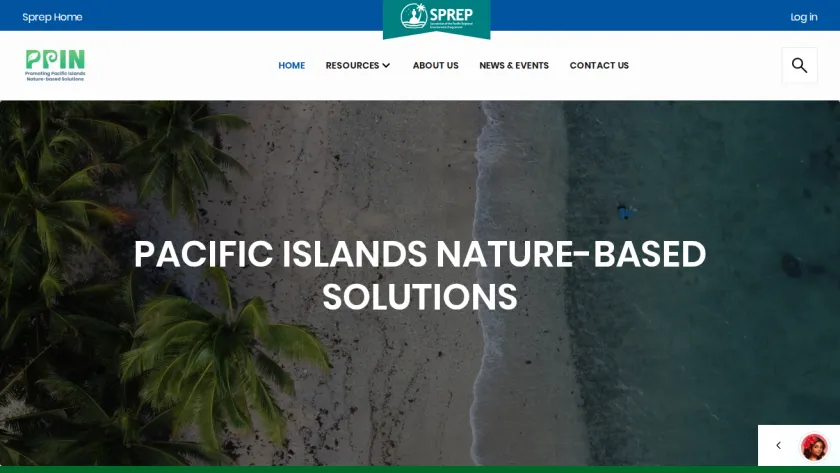
The Pacific Islands Nature-based Solutions project that appears in the library also has its own site, the Pacific NbS Resource Hub, which we built as well.
Our role
SPREP commissioned the Virtual Library from us directly, with no intermediary. Our scope was the design of the site, its build in Drupal, and maintenance since launch: the same combination of UI/UX design, Drupal development and ongoing support we provide on SPREP's other sites.
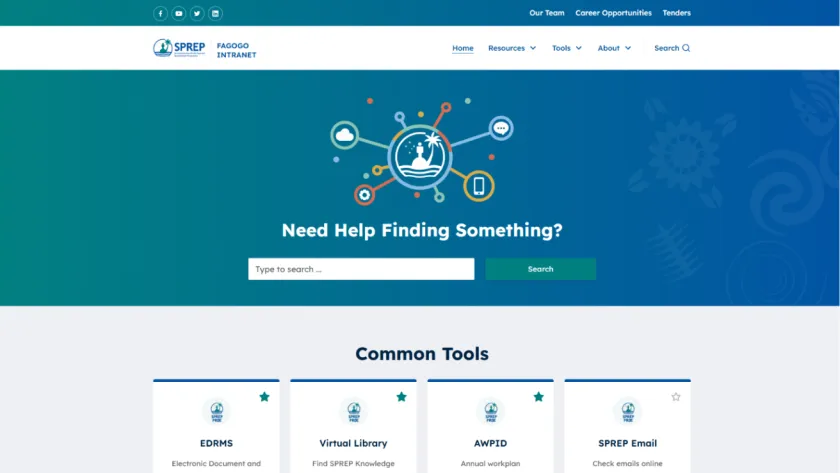
The library sits beside our other work for SPREP. We redesigned the main sprep.org site and rebuilt its theme, and SPREP has since given us further sites. PRISMSS and the Pacific NbS Resource Hub started from the sprep.org base; the library, like the Pacific Islands Roundtable site, was designed and built as a site of its own.
The result
The Virtual Library is running at library.sprep.org, and we maintain it. SPREP links to it from the Resources menu of sprep.org, and the Pacific Islands Roundtable site links to it for conference and annual meeting documents, so documents from SPREP's related bodies are reached through it too.
New SPREP publications appear on the library's homepage as they are catalogued, and the collection is open to anyone who visits. For more on this kind of work see our government and nonprofit and intergovernmental pages.
Screens
If you are planning something similar
Each service page sets out how we run that work, what you receive and how it is priced.
See it working before you commit
We build a working prototype first, so you decide against something real.