

Case study
Pacific Islands Roundtable
A site of its own for the Roundtable, presenting its members, working groups and conservation work, designed and built by us after a referral from SPREP.
An engineer reads it and replies within one business day.
The client
The Pacific Islands Roundtable for Nature Conservation (PIRT) is a coalition of organisations working on nature conservation in the Pacific. Pacific island countries and territories initiated it at the 6th Pacific Islands Conference on Nature Conservation and Protected Areas, held in the Federated States of Micronesia in 1997, to increase collaboration between the many organisations involved in conservation and development in the region.
Today PIRT is the coordination mechanism for the Pacific Islands Framework for Nature Conservation and Protected Areas 2021–2025 and the Vemööre Declaration. Its members include regional bodies such as SPREP and the Pacific Community, international conservation organisations and the University of the South Pacific. All members sign the PIRT Membership Agreement and report annually against the Framework. The Roundtable's mandate asks members to recognise and support a Pacific approach to conservation, respect national and community leadership, align their programmes with those of national partners, and report on their work to the Roundtable in a timely and transparent way. Its specialist working groups cover Nature-based Solutions, Nature Culture, area-based conservation (PACoN), invasive species (the Pacific Invasives Partnership), environmental law (PacNEL) and species recovery.
PIRT's secretariat is hosted by SPREP in Apia, Samoa, and the Roundtable is supported by the Pacific BioScapes Programme, an EU-funded action managed by SPREP. PIRT also co-hosts, with SPREP and the Government of New Caledonia, the Pacific Islands Conference on Nature Conservation, the region's conference series on biodiversity, whose 11th edition took place in Noumea in September 2026.
The problem
PIRT, a body affiliated with SPREP, needed a site of its own. A roundtable is a coalition rather than a single organisation, and its site shows what that asks of the web:
- Members have to be presented one by one, each with its role at PIRT, since the coalition is made of them.
- Working groups need their own pages, with mandate, leadership and a way to join.
- Members' conservation work has to be searchable across organisations: by member, by country, by Framework action track and by status.
- Newsletters, technical documents, policy briefs, toolkits and annual reports need one place where they can be filtered, while working-group files stay with members.
- The conference cycle needs a full event site: programme, venue and travel, registration, virtual participation and the history of the series.
What we built
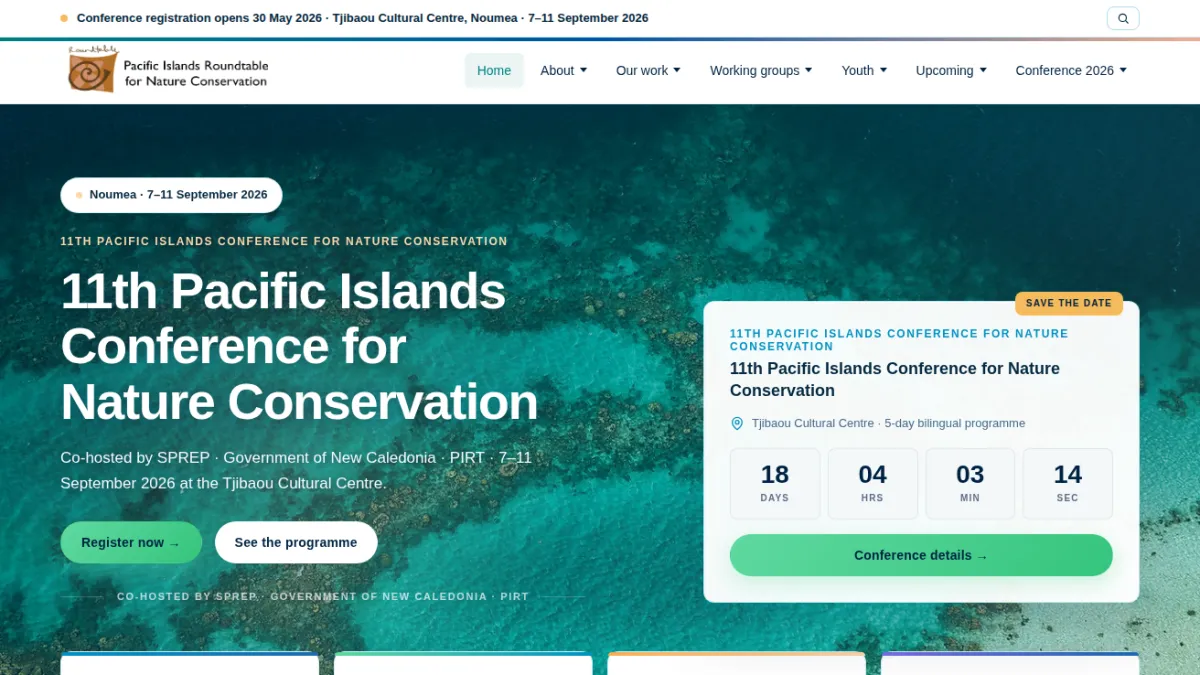
We designed and developed the PIRT site in Drupal as a standalone build: it does not use the sprep.org base that PRISMSS and the Pacific NbS Resource Hub share. What visitors find there today:
- A homepage that leads with the conference and a countdown to it, then the Framework, the working groups, news from the region and the member organisations.
- A page for each member organisation with its type, headquarters, the year it joined PIRT, its website and its role at PIRT.
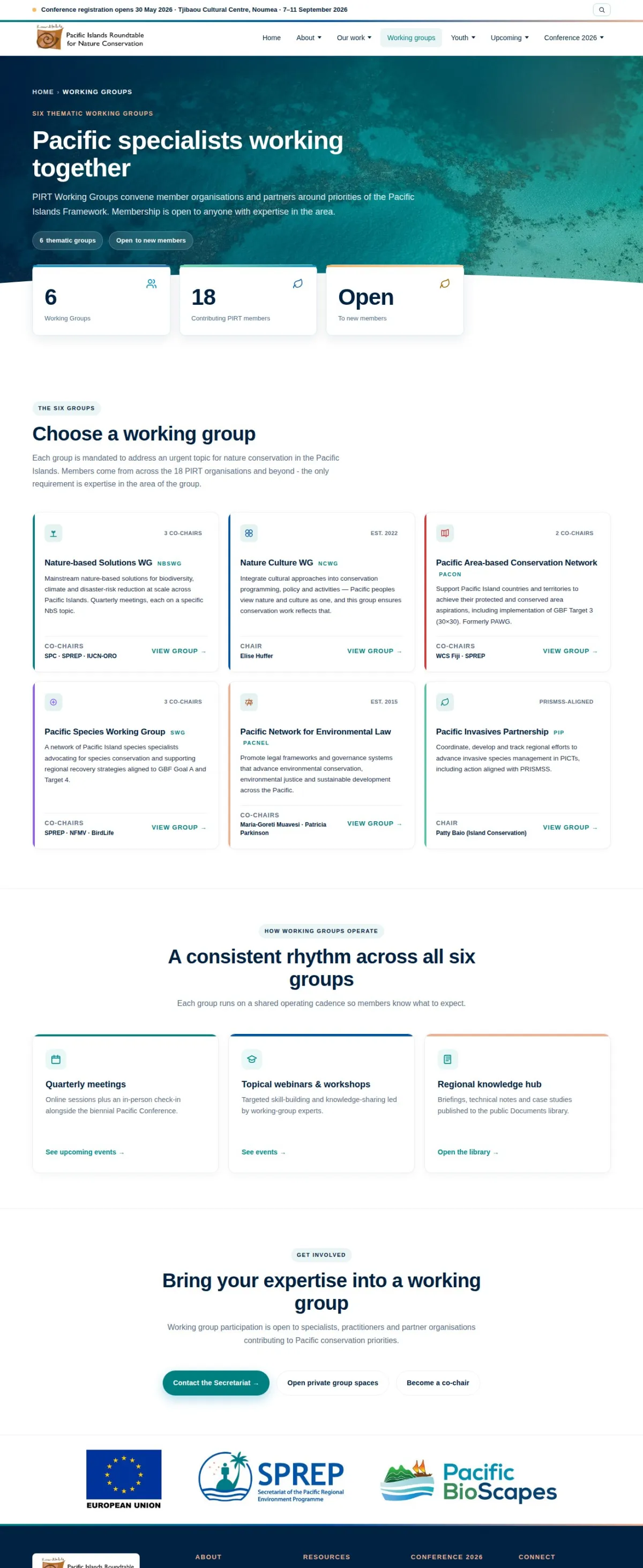
- A page for each working group with its mandate, how the group works, its chairs and secretariat, contact details and a request to join, plus links across to the other groups.
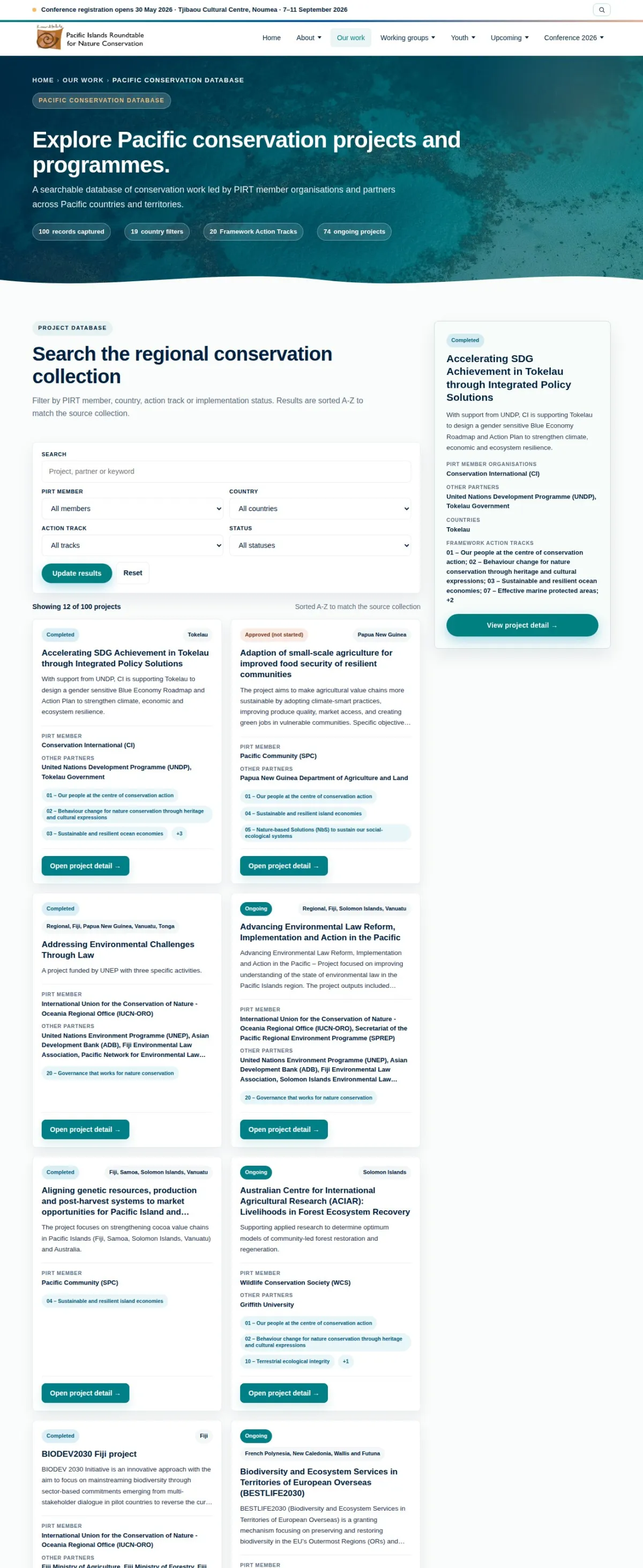
- The Pacific Conservation Database: conservation projects and programmes led by PIRT members and partners, searchable and filterable by member, country, Framework action track and implementation status, each with its own detail page.
- A document library of newsletters, technical documents, policy briefs, toolkits and annual reports, filterable by type, with working-group files available to members after sign-in.
- An events calendar with month and list views, a legend for event types, past events and a route for submitting an event.
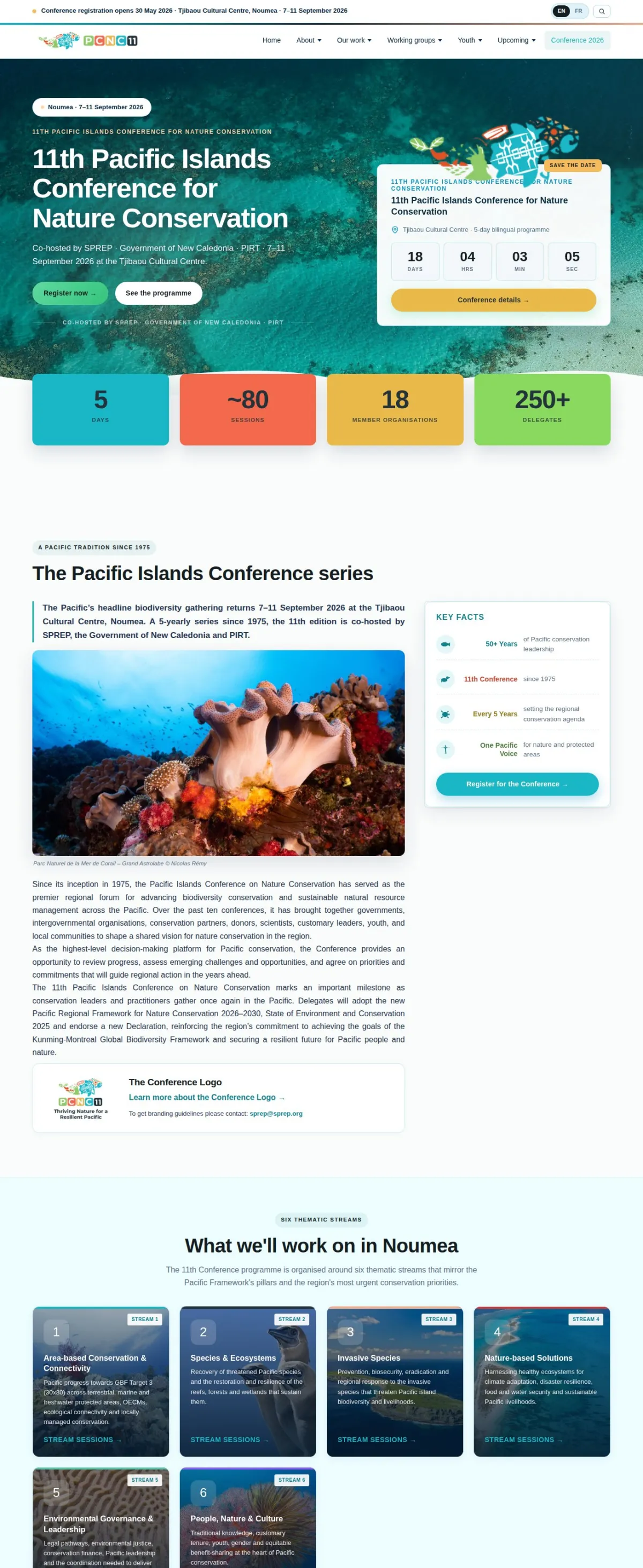
- A conference section for the 11th Pacific Islands Conference: overview, programme, venue and travel, information for participants, virtual participation, registration, conference history, sponsorship and partners.
- A conference programme with list and matrix views and search, where signed-in attendees can save sessions.
- A virtual participation page with delegate Zoom rooms, public YouTube livestreams, in-country hubs and replays.
- Youth pages, news, a newsletter archive, funding and opportunities, and site-wide search.
- Privacy, terms, cookies and accessibility pages linked from the footer.
Our role
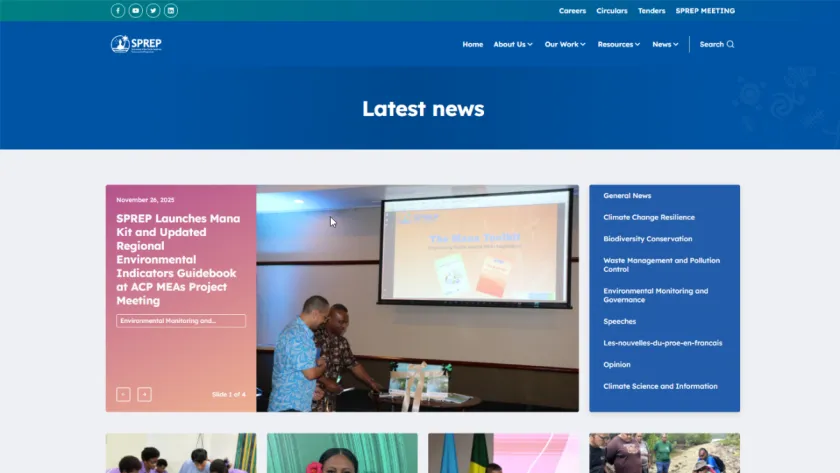
We worked directly with PIRT. The introduction came from SPREP, a PIRT member and host of its secretariat, for which we had redesigned sprep.org. Our scope was design, the Drupal build and maintenance after launch: UI/UX design, Drupal development and ongoing support.
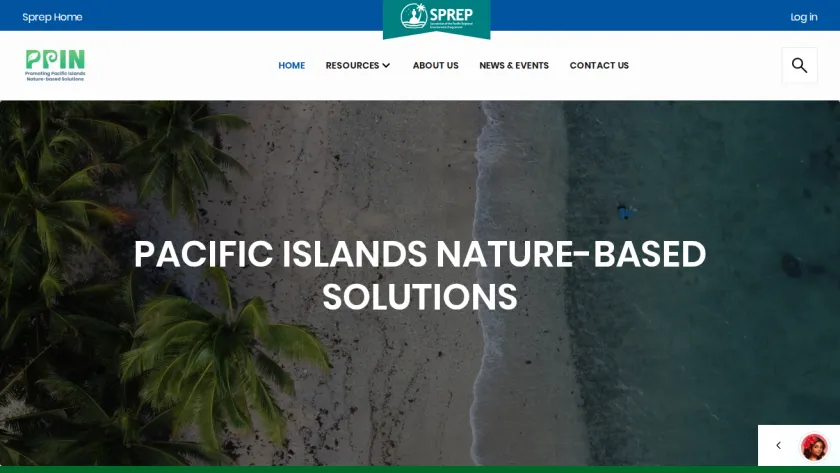
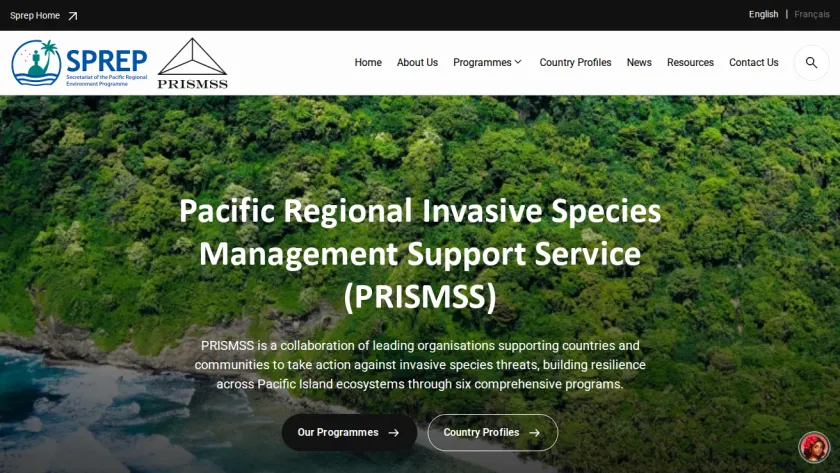
The PIRT site sits beside the sites we have built for SPREP but does not share their code base. It links to the SPREP Virtual Library for documents such as the conference information booklet, and the Pacific NbS Resource Hub links to PIRT and its Nature-based Solutions Working Group.
The result
The site is live at pacificislandsroundtable.com and we maintain it. It carried the registration and programme for the 11th Pacific Islands Conference. Registrants received confirmation and approval emails; registration closed on 10 August 2026, and the programme, virtual participation page and replays remain on the site.
PIRT came to us on SPREP's recommendation, which makes this project part of the result of the SPREP work: a client relationship that brought a related organisation to us. More on work for public and intergovernmental bodies is on the government and nonprofit and intergovernmental pages.
Screens
If you are planning something similar
Each service page sets out how we run that work, what you receive and how it is priced.
Enterprise Website Development
Public websites designed and built as a channel: design system, page speed, accessibility and several languages, with Drupal at the core.
UI/UX Design for Web Platforms
Interface and UX design for portals, admin tools and public sites, handed over as a design system developers can build from.
More case studies
See it working before you commit
We build a working prototype first, so you decide against something real.