
Drupal 10 reaches end of life on 9 December 2026
Security support for Drupal 10 ends on 9 December 2026. The site keeps running on the day; what stops is the security releases for Drupal 10 core and for the Drupal 10 branches of contributed modules. The move from Drupal 10 is an upgrade to Drupal 11, the current version, with Drupal 12 planned as the next step. The database, the content and the screens your editors use stay where they are; the code around them changes. How that work runs, and why the module audit comes first, is set out on Drupal upgrade to Drupal 11 and 12.
A site still on Drupal 7 is in a different position. Community security support for Drupal 7 ended on 5 January 2025, and a Drupal 7 site cannot be upgraded in place: its content is mapped into a rebuilt site on current Drupal, with a redirect for every address that changes. That work is Drupal 7 and legacy CMS migration.
Upgrade or migration: which one your site needs
- Drupal 10: an upgrade to Drupal 11, with Drupal 12 planned. The database, content, URLs and editorial screens stay as they are.
- Drupal 11: the step to Drupal 12 is prepared now, with deprecated code cleared and every module checked for a Drupal 12 release.
- Drupal 8 or 9: an upgrade to Drupal 11 through the same architecture, with more deprecated code to clear on the way.
- Drupal 7: a migration. Content, users and files are mapped into a rebuilt site on Drupal 11, and old addresses answer through redirects.
- WordPress, Joomla or a bespoke CMS: a migration onto Drupal 11, in the same way.
Articles on migration and upgrades
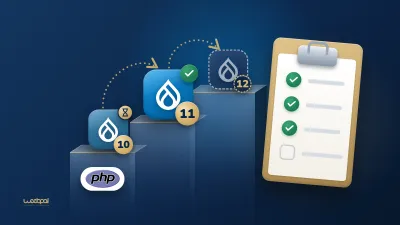
Drupal 10 to 11 upgrade checklist, with Drupal 12 notes
PHP and database versions, Upgrade Status, Drupal Rector, the modules removed in Drupal 11, testing and rollback, as a printable PDF and a white-label one.

Drupal end-of-life dates and PHP requirements, from Drupal 7 to 12
Which Drupal versions are supported and until when, with the PHP and database versions each one needs, checked against drupal.org and dated.

What we changed to make WE Mega Menu compatible with Drupal 11 and 12
The commits behind WE Mega Menu 8.x-1.17: a call static analysis missed, hooks moved into a class, Bootstrap 3 no longer loaded, a new version constraint.
How to migrate a complex website from Drupal 7 to Drupal 9
The migration path for a large Drupal 7 site: content audit, field mapping, URL preservation, and checks that protect traffic.
How a Drupal 7 migration runs
- Audit. Content, users, files, modules and integrations, and what should not come across.
- Entity mapping. Every old field mapped to its place in the new content model, agreed before migration code is written.
- Fixed price. The migration is quoted against the audit and the mapping.
- Trial migration. Run again each time the mapping is corrected, on a site you can browse and compare with the live one.
- Rehearsed cutover. The switch is practised on a copy first, with the old site still live.
- Watch window. Redirects, search coverage and errors checked after launch.
An upgrade from Drupal 10 takes a shorter path: a module compatibility audit that you keep, a fixed price against that module list, the work done and tested on staging, acceptance by your team, then go-live with a rollback ready.
How we run this work
We audit before we quote, and the price is fixed against what the audit found. Apex Embroidery Designs moved 20 million items from Drupal 7 onto a rebuilt Drupal store, and the live store moved to the new system without interrupting the business: see the Apex Embroidery Designs case study. Development work carries our warranty: one year by default, up to three.
- Drupal upgrade to Drupal 11 and 12: the module compatibility audit comes first, and you keep it.
- Drupal 7 and legacy CMS migration: content and URLs mapped, and a trial migration you inspect before cutover.
- Drupal site audit: when you first need to know what is in the site before choosing between the two.
- Project sizes, from Micro to Strategic, are on the pricing page.