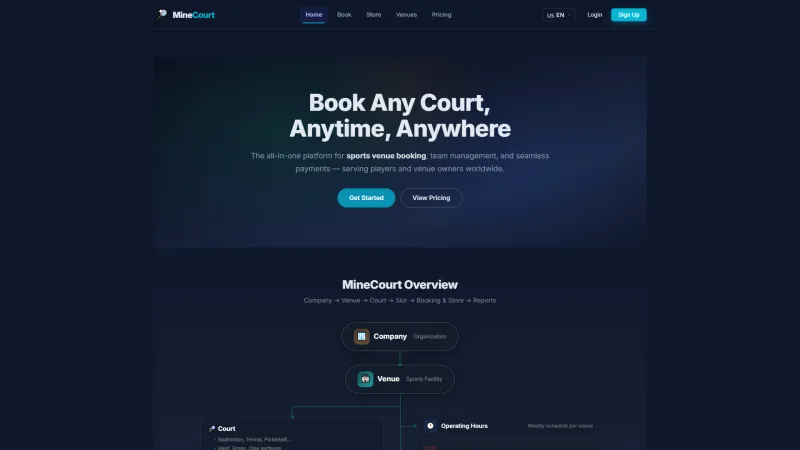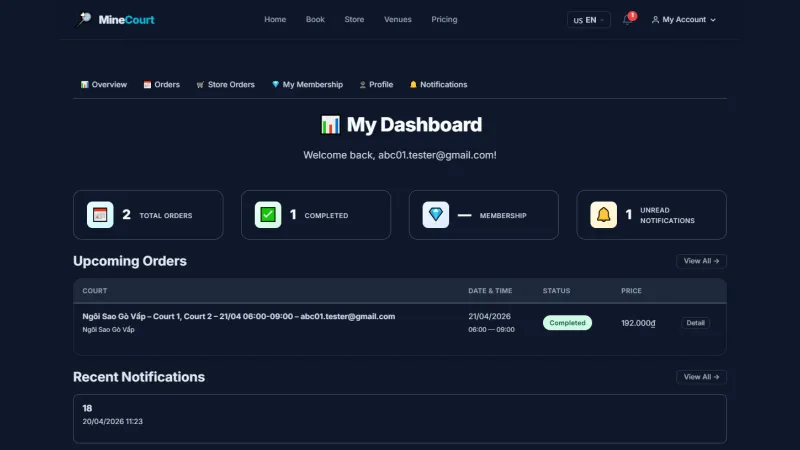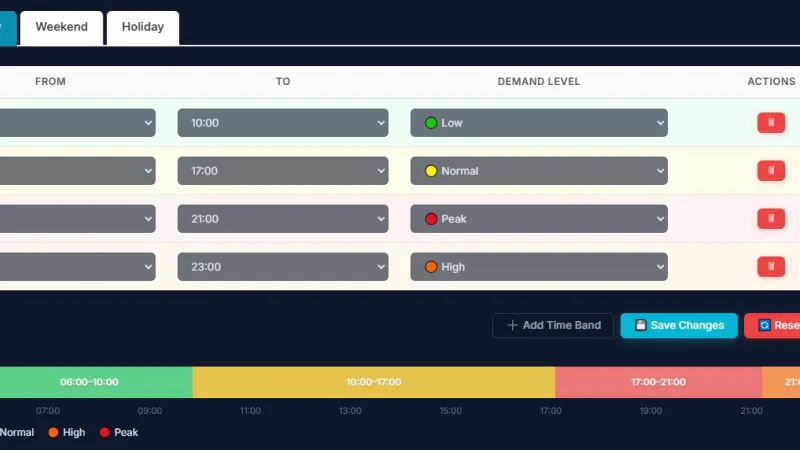

System Login
About this screen: Access the Company Owner privilege level.
Navigation: Menu → Login
- Demo access: sandbox accounts are issued on request: request a guided demo.

Company Owner Menu
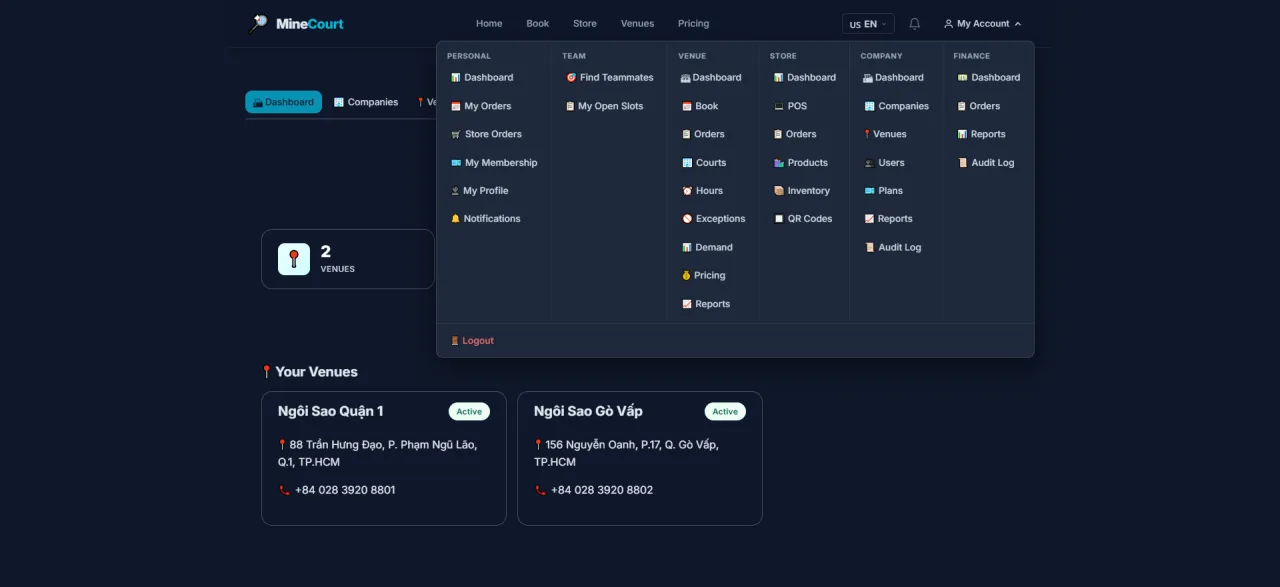
About this screen: Dedicated navigation menu for Company Owners.
Navigation: Tap My Account in the navigation bar
- Company: Manage company organization
- Finance: Financial management & reporting
- Each section has detailed sub-menus inside
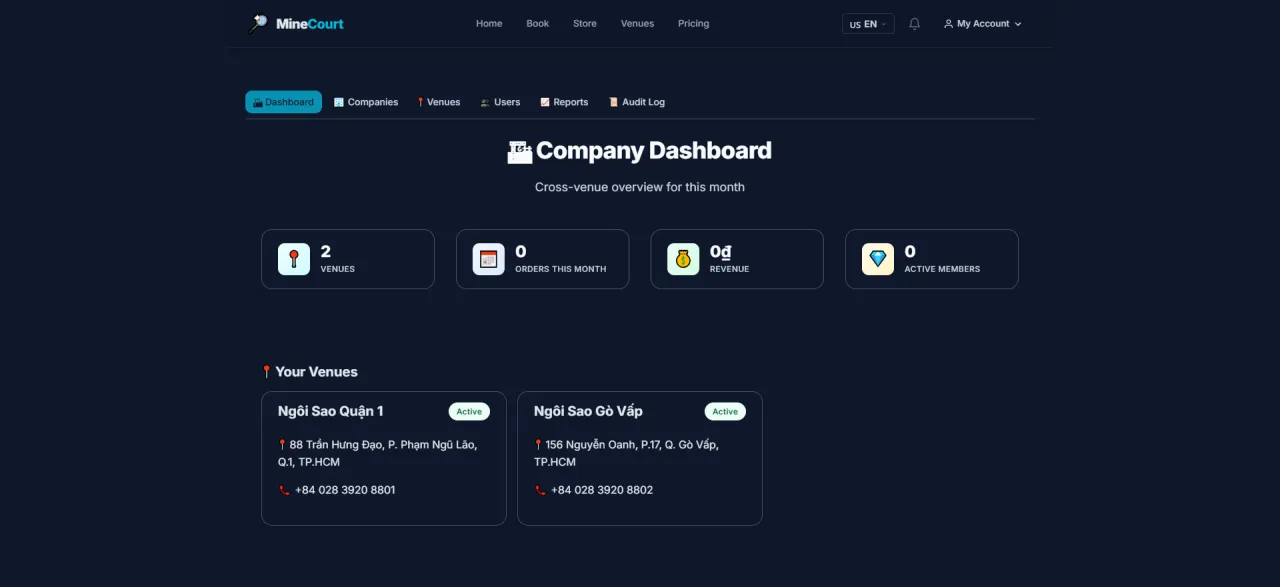
Company Dashboard
About this screen: Company dashboard displaying key metrics (total venues, orders this month, revenue, active members) plus a grid of venue cards showing name, address, phone, and status.
Navigation: Company module (default view after login)
- Quick stats: Total Venues, Orders This Month, Revenue, Active Members
- Your Venues list: all active courts
- Each venue card shows: name, address, phone, and status
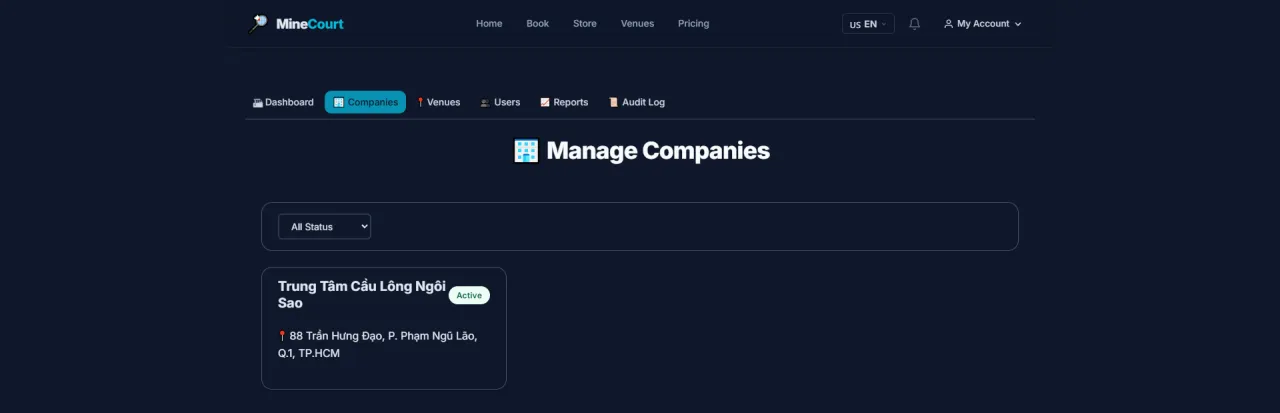
Manage Companies
About this screen: Table listing all companies in the organization hierarchy, showing company name, active status, contact email, and registered address for each entity.
Navigation: Company module → Companies tab
- View all child and parent companies in the organization
- Track active status, contact email, and registered address for each entity
- Click any row to view specific company details and branding
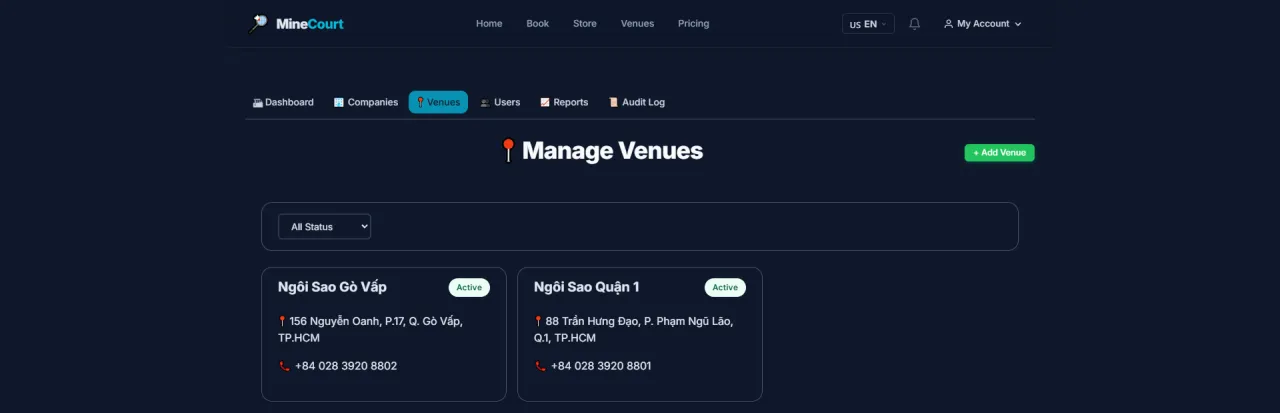
Manage Venues
About this screen: View and manage all venues belonging to your company.
Navigation: Company module → Venues tab
- Full list of your venues: name, address, phone, and status
- Click any venue to view its detailed activity data
- Click Add Venue to register a new court facility
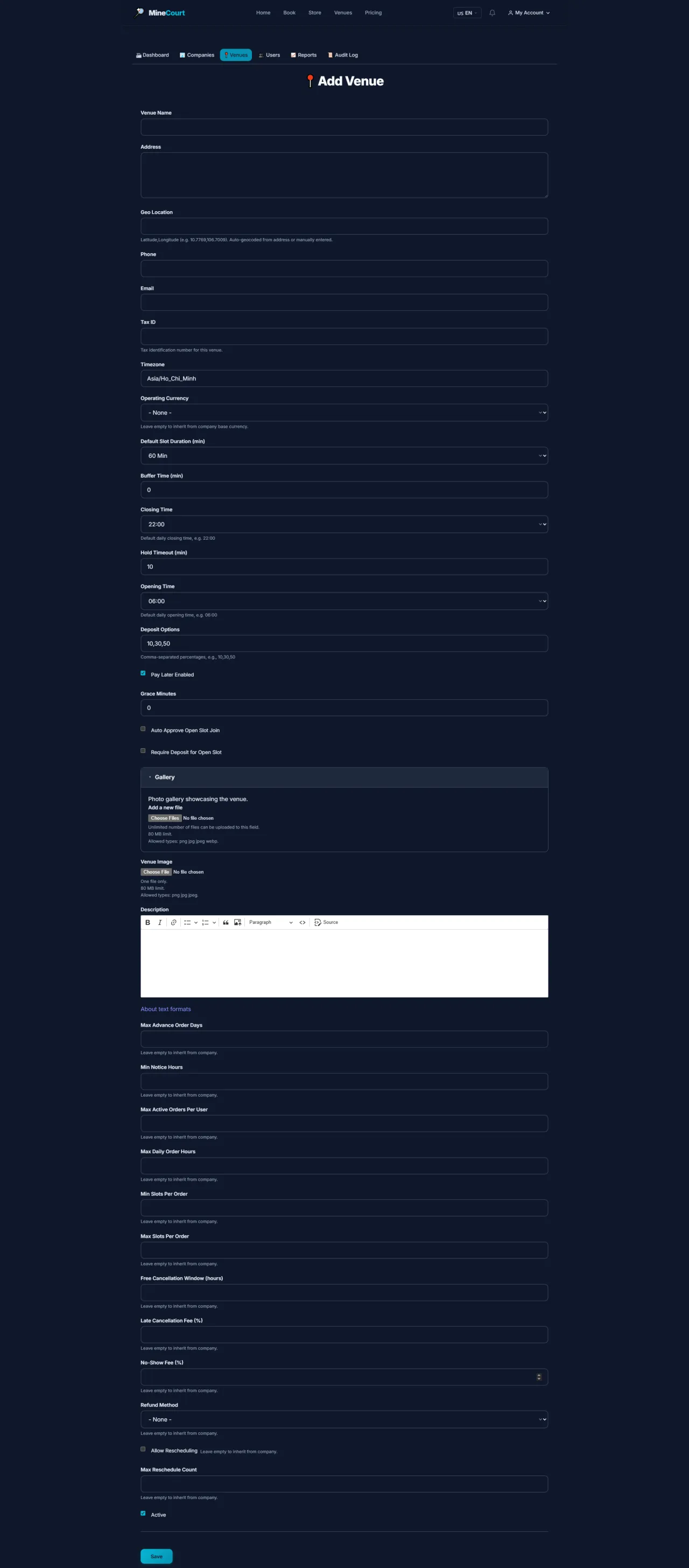
Add New Venue
About this screen: Create and register a new venue under your company.
Navigation: Venues → Add Venue
- Fill in: Venue name, Address, Phone, Email
- Upload venue banner and logo
- Select the Company that owns this venue
- Configure timezone and currency
- Click Save to create
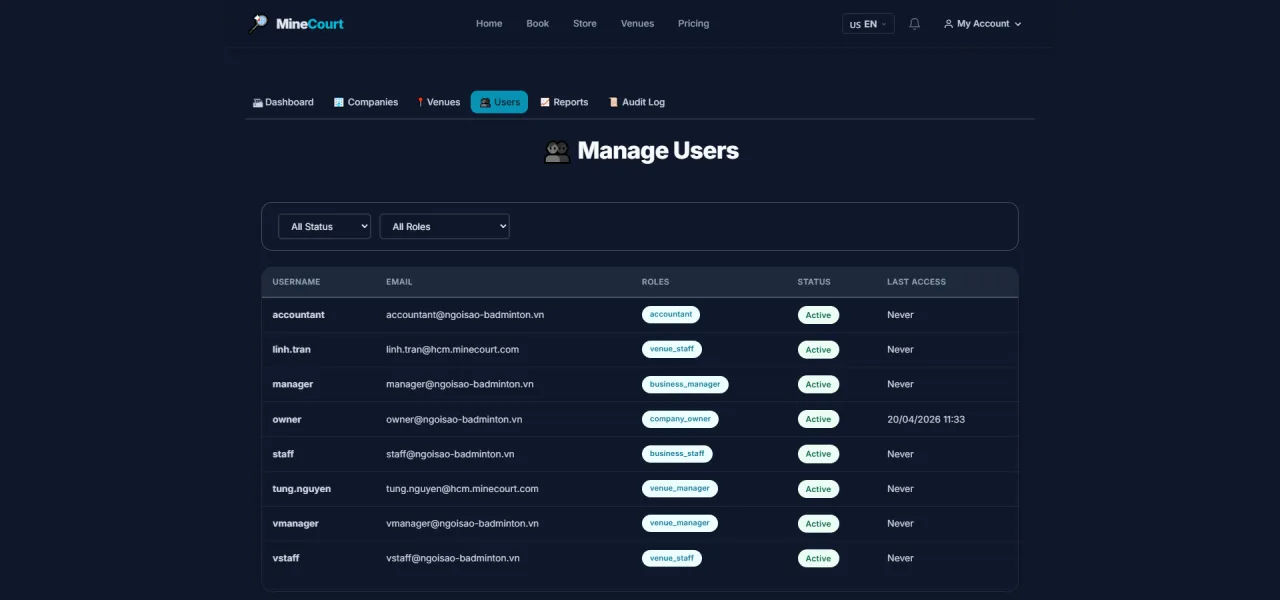
Invite & Assign Users
About this screen: Add new users or invite existing accounts, and assign roles per venue.
Navigation: Company module → Users tab
- User list shows: name, email, role, and status
- Assignable roles: Venue Manager, Venue Staff, Accountant
- Click Add User to create a new account or invite an existing user
- After adding: assign the relevant venue(s) and permissions
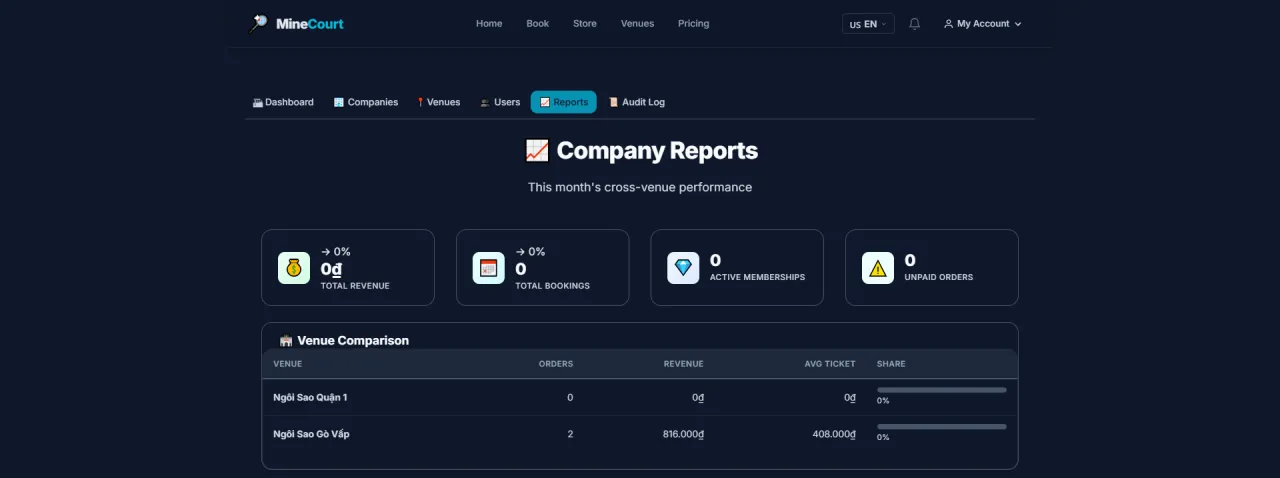
Company Reports
About this screen: Aggregated revenue and activity reports across all venues in base currency (USD).
Navigation: Company module → Reports tab
- Compare revenue between venues in the company
- Monthly breakdown: court bookings, store sales, memberships
- Customer growth chart (new registrations)
- All figures displayed in base currency for cross-venue consistency
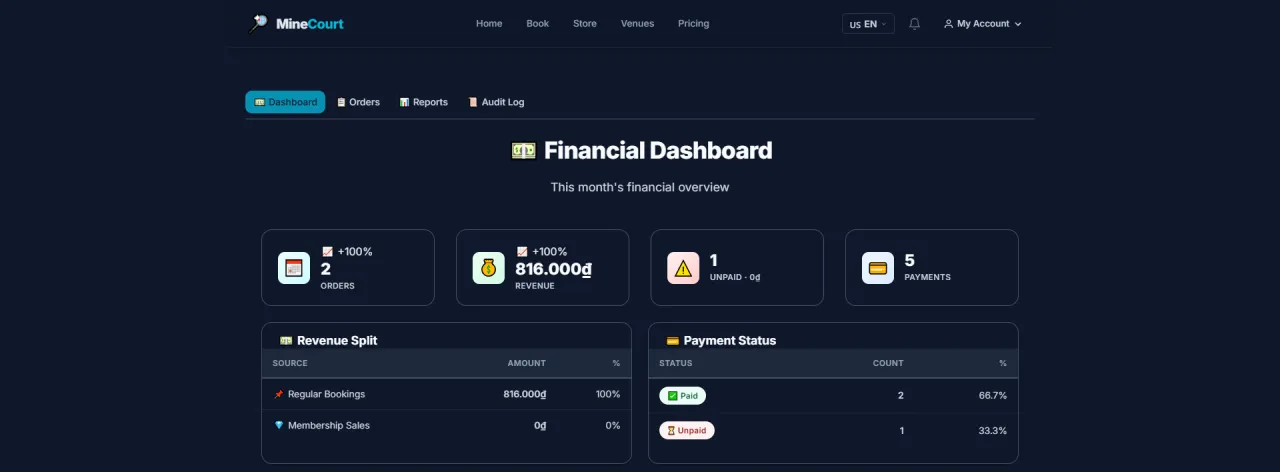
Financial Dashboard
About this screen: Company-wide financial summary (revenue from Bookings, Store, and Memberships).
Navigation: Finance module (default view)
- Revenue by day/week/month, as a visual chart
- Breakdown by source: Bookings, Store, Membership, Tournament
- All figures consolidated into company base currency
- Quick view: this month's total vs. previous month
Financial Reports
About this screen: Detailed financial reports (revenue from bookings and store orders).
Navigation: Finance module → Reports tab
- Filter by: date range, venue, payment method
- Breakdown by transaction type: Cash, Card, E-Wallet, Bank Transfer
- Export to CSV/Excel for use with external accounting software
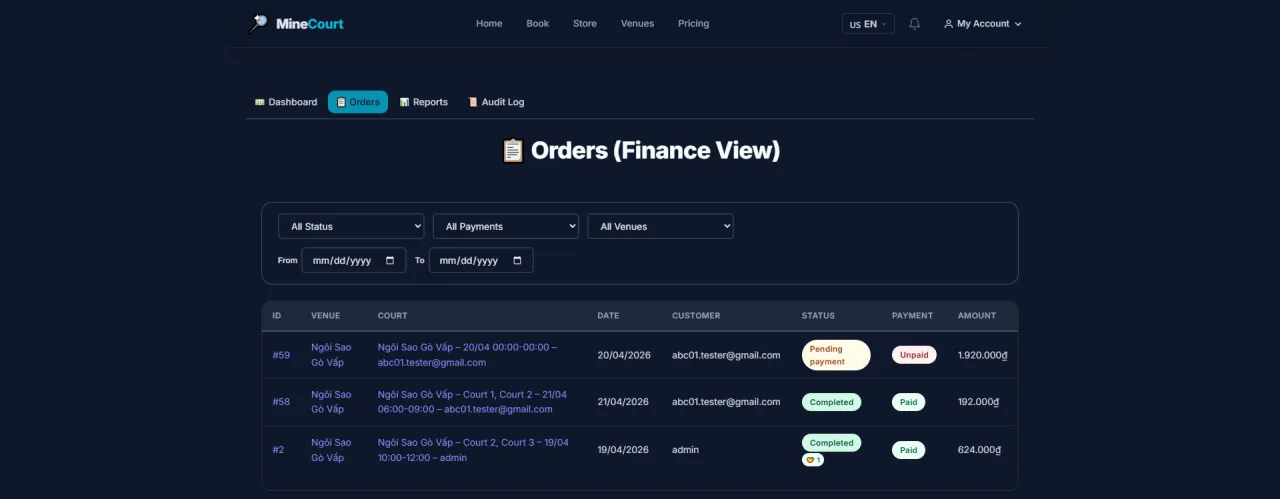
Finance Orders
About this screen: Full order list from a financial perspective, essential for accounting teams.
Navigation: Finance module → Bookings tab
- Each row: order ID, customer, venue, local + base currency amount, payment status
- Payment statuses: Paid, Unpaid, Refunded, Partially Refunded
- Click any order to view transaction detail and payment history
Company Audit Log
About this screen: Immutable log of all significant company actions; it cannot be deleted or edited.
Navigation: Company module → Audit Log tab
- Records: Who, Did What, When, Old Value → New Value
- Events logged: venue creation/edit, staff add/remove, pricing changes, booking cancellations
- Data retained for minimum 7 years, suitable for internal audit
Finance Audit Log
About this screen: Dedicated log for financial events (refunds, price overrides, payment status changes).
Navigation: Finance module → Audit Log tab
- Records: void transactions (PIN required), wallet refunds, price overrides, gateway events
- Each entry: user, timestamp, before/after values
- Used to detect fraud, accounting discrepancies, and verify customer disputes
Running MineCourt in your own organisation
Names, prices and plans on these screens are set up differently for each deployment. We deploy MineCourt on your domain and adapt it to how you work, and you receive the running system and its source code.